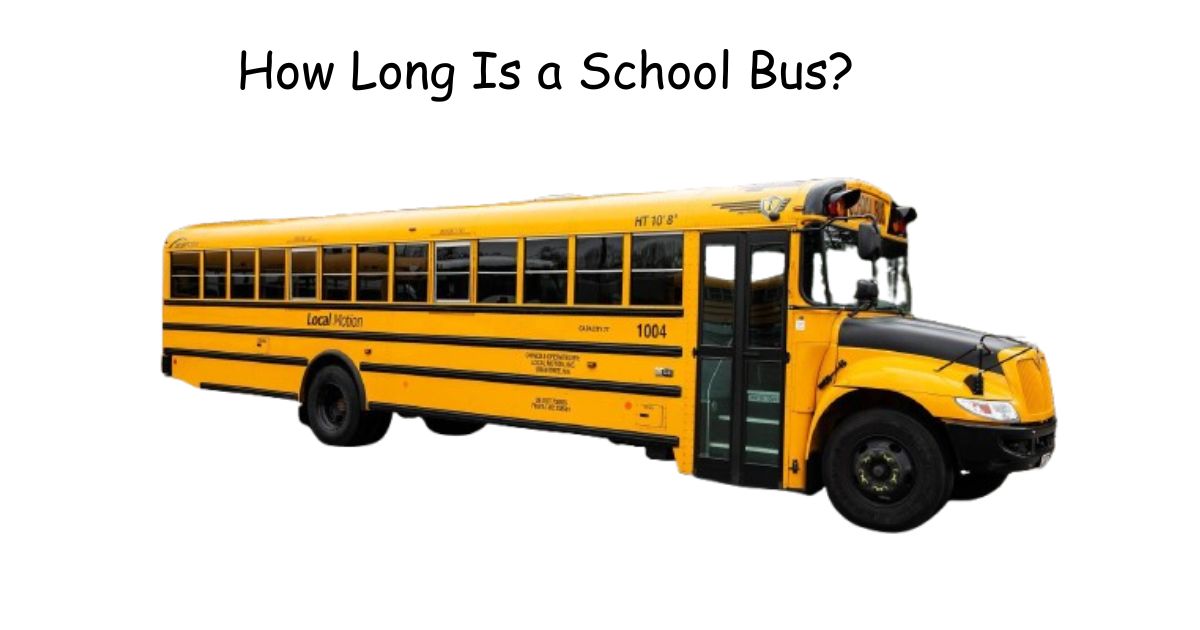
Picture this: you’re trying to figure out if a rented school bus fits through your venue’s gate, or you’re mid-way through planning a skoolie build and you need floor space numbers before you commit. You search “how long is a school bus” and get a wall of technical specs with no real context.
That’s what this is here to fix.
It’s Not One Size
The first thing worth knowing — there is no single school bus length. There are four different types built to federal standards, each one sized for a specific purpose. The gap between the smallest and largest is 25 feet. That’s significant.
The smallest Type A runs 20 to 25 feet. The largest Type D stretches to 45 feet. The classic yellow bus most people picture falls somewhere in the middle — usually 35 to 40 feet, which is the Type C.
So when someone says “a school bus is 40 feet,” they’re not wrong exactly. They’re just describing one type out of four.
The Four Types and Their Real Dimensions
| Type | Length | Seats | Built For |
| A | 20–25 ft | 10–30 | Urban routes, special needs |
| B | 25–35 ft | 30–36 | Narrow streets, mid groups |
| C | 35–40 ft | 40–84 | Standard school routes |
| D | 40–45 ft | Up to 90 | Long routes, max capacity |
Type A sits on a van chassis. It’s compact, accessible, and built for city blocks and smaller groups. You’ll see these at schools serving kids with disabilities or on routes where a full-size bus simply can’t navigate.
Type C is the one burned into everyone’s memory from childhood. Hood in front, engine up front, long yellow body. It carries anywhere from 40 to 84 students depending on their age — younger kids sit two per bench, older students get one seat each.
Type D has a flat front or rear engine. That design reclaims space that would otherwise go to the hood, which is why it can seat up to 90 passengers in the same 45-foot footprint.
Length in Feet, Inches, and Meters
Different situations call for different units. Here’s how a standard 35-foot Type C and the largest 45-foot Type D convert:
| Measurement | 35-foot bus | 45-foot bus |
| Feet | 35 ft | 45 ft |
| Inches | 420 in | 540 in |
| Meters | ~10.7 m | ~13.7 m |
Inches matter most if you’re working with blueprints or architectural drawings. Meters come up with international specs or metric-based fleet software.
One real-world anchor: a 35-foot bus is roughly the length of two standard cars parked end to end. A 45-footer is closer to three.
Read Also: How Long Is 3 Meters? 12 Common Things That Are 3 Meters Long
Width and Height — The Numbers People Forget
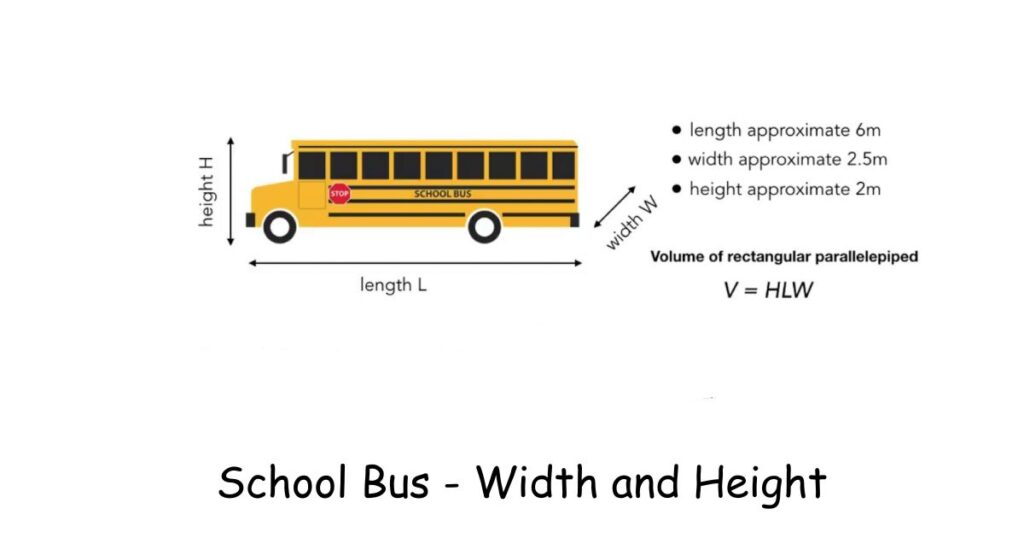
Everyone asks about length. These two get ignored and then cause headaches.
Width: The bus body is 8 to 8.5 feet across. With mirrors extended, that number climbs to 10 or 11 feet total. If you’re measuring a gate, a driveway, or a garage bay — use 11 feet as your minimum clearance, not 8.
Exterior height: 10 to 11 feet. This is the number that determines whether a bus fits under a parking structure, a covered venue entrance, or a low bridge on a planned route. Don’t skip it.
Interior clearance: Around 6 to 6.5 feet. Most adults can stand upright, but not comfortably. Skoolie builders often raise the roof 1 to 3 feet specifically for this reason.
Passenger Count vs. Length — How They Connect
If you’re looking at a bus listed by capacity rather than type, here’s the direct translation:
- 72-passenger bus → approximately 35 feet (compact Type C)
- 84-passenger bus → 39 to 40 feet
- 90-passenger bus → around 45 feet (Type D)
The reason capacity and length connect so directly comes down to seating rules. Each bench holds two small children or one high schooler. More seats mean more bus.
For Skoolie Builders
If you’re converting a school bus into a living space, length is essentially your square footage budget.
A 35-foot bus gives you roughly 240 square feet of floor space. A 40 to 45-foot bus pushes that to 260 to 280 square feet. For reference, that’s comparable to a small studio apartment — tight, but very livable with smart design.
Shorter builds (20 to 25 feet) suit solo travelers or couples who want something manageable on the road. Longer builds give more room but demand more driving skill and much more patience in urban parking situations.
One thing electric and diesel buses share: the same exterior dimensions. The LionC electric Type C measures exactly 39.4 feet — batteries live under the floor, not in the passenger area, so the body stays the same size.
Read Also: How Long Is 5 Meters? 10 Common Things That Are 5 Meters Long
Three Things People Get Wrong
Mirrors aren’t in the width measurement. The 8-foot width refers to the body only. In traffic or tight spaces, you’re working with 10 to 11 feet of real horizontal space. Plan for it.
Turning radius surprises people. A full-size Type C has a wheelbase of around 20 feet. That translates to a wide, slow turn. Tight driveways and sharp intersections that look fine on paper can become problems in person.
Bigger doesn’t always mean better for fuel. A 45-foot Type D burns noticeably more on hills and city routes compared to a compact Type A. Shorter buses can cut fuel consumption by 20 to 30% on urban loops. For anyone buying or operating a bus regularly, that adds up fast.
If You’re Buying or Renting
Match the bus to the actual route, not the maximum passenger count you might theoretically need someday.
City routes with tight turns → Type A (20 to 25 feet). Suburban standard routes → Type C (35 to 40 feet). Long rural hauls with high volume → Type D (up to 45 feet).
New prices run from around $100,000 for a Type A to $150,000 and up for a Type D. Used Type C buses — common in the skoolie market — often land between $5,000 and $20,000 depending on year and mileage.
For rentals: always ask for bumper-to-bumper length and add 2 to 3 feet when mapping out where the bus will park or turn. Drivers need that buffer. Venues that didn’t measure properly find out the hard way.
Garage storage needs a door clearance of at least 12 feet tall and 11 feet wide to safely clear a full-size bus with mirrors.
Quick Questions, Direct Answers
How long is a school bus in feet?
20 to 45 feet depending on type. The most common full-size version (Type C) runs 35 to 40 feet.
How long is a Type C school bus?
35 to 40 feet. The 72-passenger version is typically around 35 feet; the 84-passenger version runs 39 to 40 feet.
How wide is a school bus in feet?
Body width is 8 to 8.5 feet. With mirrors, plan for 10 to 11 feet.
How tall is a school bus?
10 to 11 feet on the outside. About 6 to 6.5 feet of interior headroom.
How long is a school bus in meters?
A 35-foot bus is about 10.7 meters. A 45-foot bus is roughly 13.7 meters.
How long is a school bus in inches?
420 inches for a 35-foot bus. 540 inches for a 45-foot model.
The One Thing Worth Remembering
If you’re planning around a school bus — whether for parking, routing, building, or buying — don’t use a round estimate. Get the actual bumper-to-bumper number for the specific bus you’re dealing with.
When that’s not possible, use 40 feet as your working number for a full-size bus. It’s conservative enough to cover most Type C models and gives you a realistic buffer for turns and overhang.
Add width with mirrors (11 feet) and exterior height (10 to 11 feet) to that mental picture, and you’ll have what you actually need to make decisions without surprises.

I am the editor and author of StoriesRadius.com, a blog about measurements and dimensions. I enjoy turning numbers and sizes into simple stories that anyone can understand. From everyday objects to curious facts, I share clear guides based on real research and experience. My goal is to make learning about length, height, and size fun, useful, and easy for all readers.