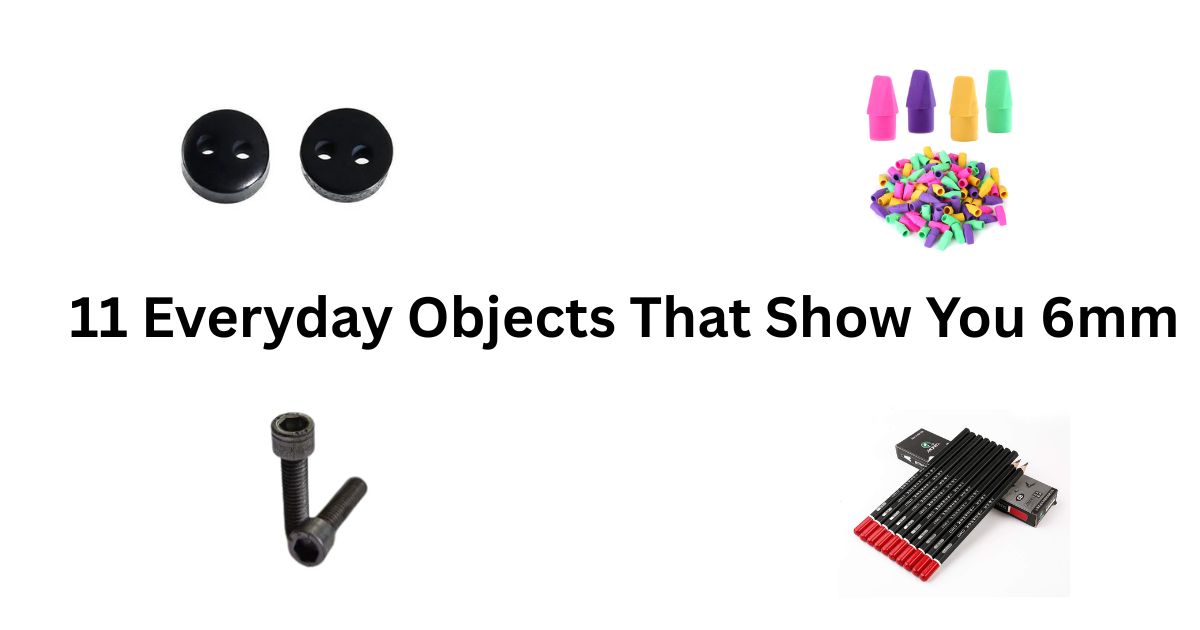
Ever ordered a bolt online and had zero mental image of how small 6mm actually is? Or maybe a doctor mentioned a “6mm nodule” and you just nodded, completely blank? Six millimeters sounds almost trivially small — until you need to know it precisely.
Quick anchor: 6mm = 0.6 cm = approximately 0.236 inches — just under a quarter inch.
This guide walks you through 11 everyday objects sitting right at that 6mm mark, so the next time this measurement shows up in hardware, crafts, jewelry, or medicine, you’ll have an instant mental ruler ready.
How Big Is 6mm, Really?
Before the list, here are three fast body-based anchors:
- Pinky fingernail width — most adults measure 8–12mm, so 6mm is noticeably narrower
- Six ballpoint pen tips side by side — each tip is ~1mm, so six in a row = 6mm
- On a tape measure — count six tiny tick marks from any centimeter line; that’s your 6mm
11 Real Things That Measure Approximately 6mm
| Object | Size | Category |
| M6 Bolt Shank | 6.0mm exact | Hardware |
| Tactile Push Button | 6.0mm × 6.0mm | Electronics |
| Pencil Eraser Diameter | ~5–7mm (avg. 6mm) | Stationery |
| Pencil Hex Width | ~6mm | Stationery |
| Four Stacked Dimes | 5.4mm almost | Coins |
| Three Stacked Nickels | ~5.85mm | Coins |
| Small Green Pea | ~6–8mm | Food / Medical |
| Standard Straw (OD) | ~6mm | Kitchen |
| Butterfly Earring Back | ~6mm | Jewelry |
| Drawstring Cord | 6mm standard | Apparel / Crafts |
| Small Shirt Button | ~6mm | Sewing |
1. 🔩 M6 Bolt (Shank Diameter)
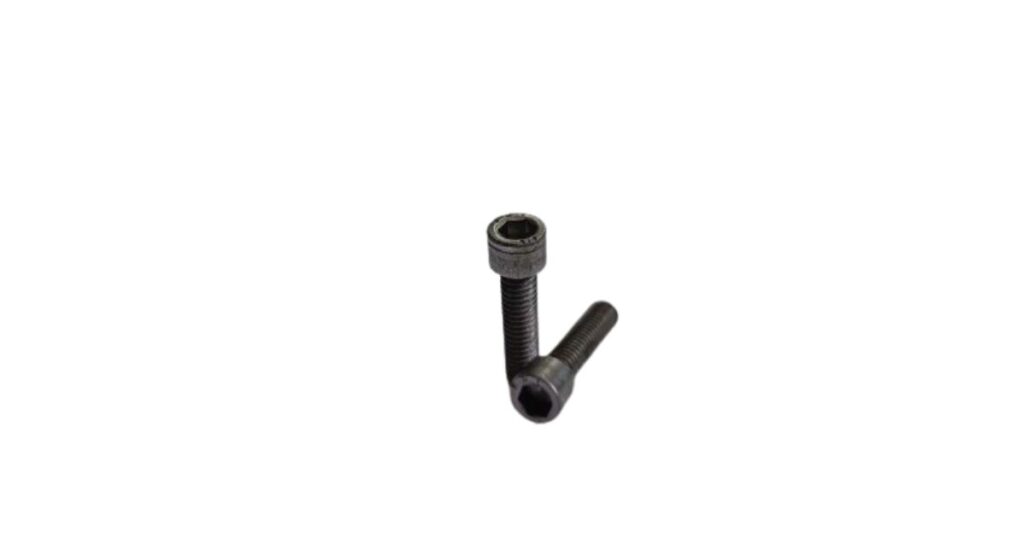
The M6 bolt carries its measurement right in its name — the “6” refers to the 6mm nominal shank diameter, with a standard coarse thread pitch of 1.0mm. It’s one of the most widely used fasteners in flat-pack furniture, bicycles, and machinery.
If you’ve ever assembled an IKEA shelf or tightened a bike stem, you’ve handled one without realizing it was your perfect pocket-sized 6mm reference. Hold one against a drill bit before buying online — it eliminates guesswork instantly.
2. 🔘 6×6mm Tactile Push Button Switch
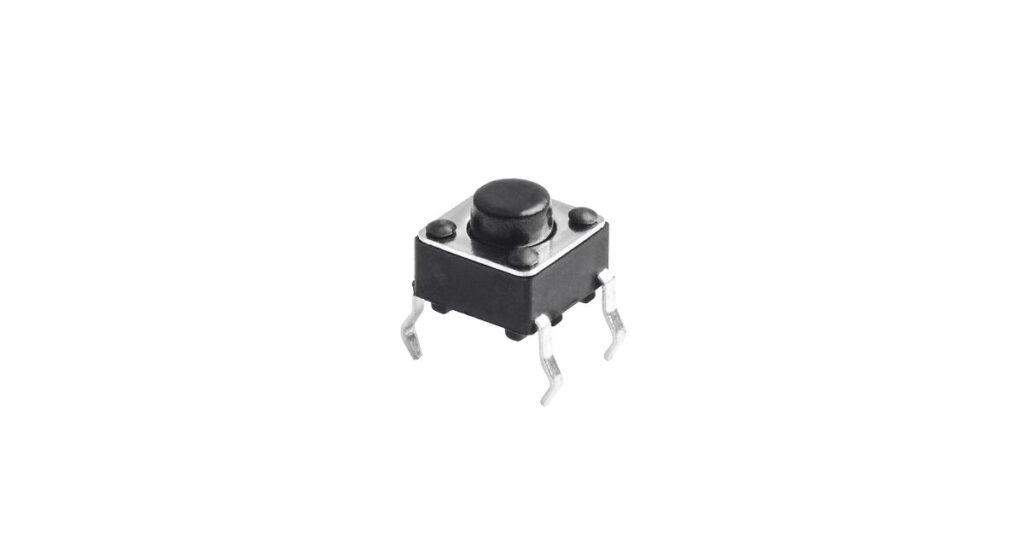
This square miniature switch measures exactly 6mm × 6mm and is the default component in DIY electronics, Arduino kits, and TV remotes. It fits standard breadboard spacing without any modification — which is precisely why it became the industry standard size.
Satisfying to click, easy to source, and cheap in bulk. If you’re building a circuit for the first time, this is almost certainly the button sitting in your starter kit.
3. ✏️ Pencil-Top Eraser Diameter
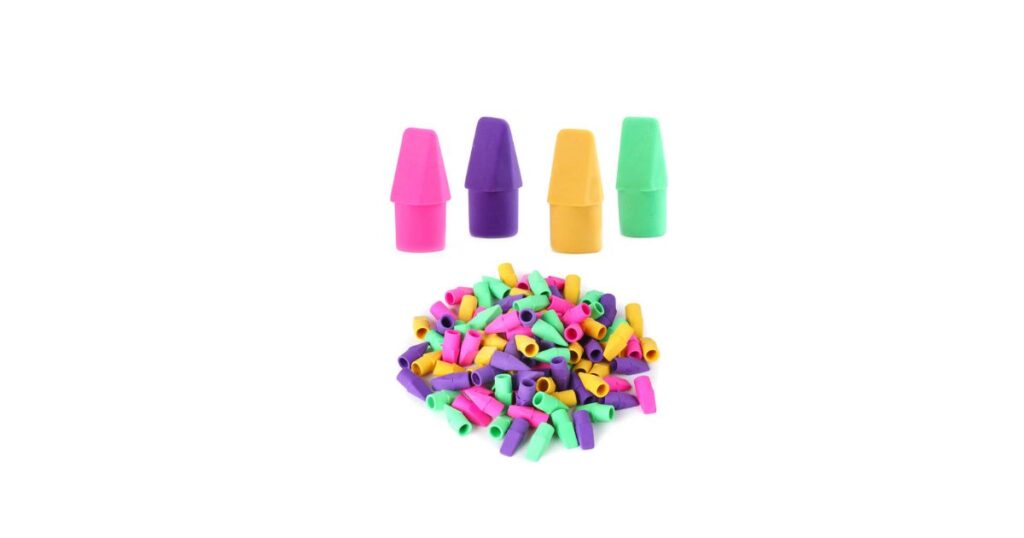
The small pink eraser on a standard #2 pencil measures approximately 6mm in diameter — precise enough to erase a single mistyped letter without smudging neighboring words. Brands vary slightly between 5–7mm, but 6mm is the consistent average across major manufacturers.
It’s one of those objects you’ve touched thousands of times without ever registering its size. Now you have a reference that lives in every desk drawer, backpack, and pencil cup you own.
Read also: How Big Is 2mm? 12 Common Things That Are 2mm Long or Big
4. ✏️ Pencil Hexagon Face-to-Face Width
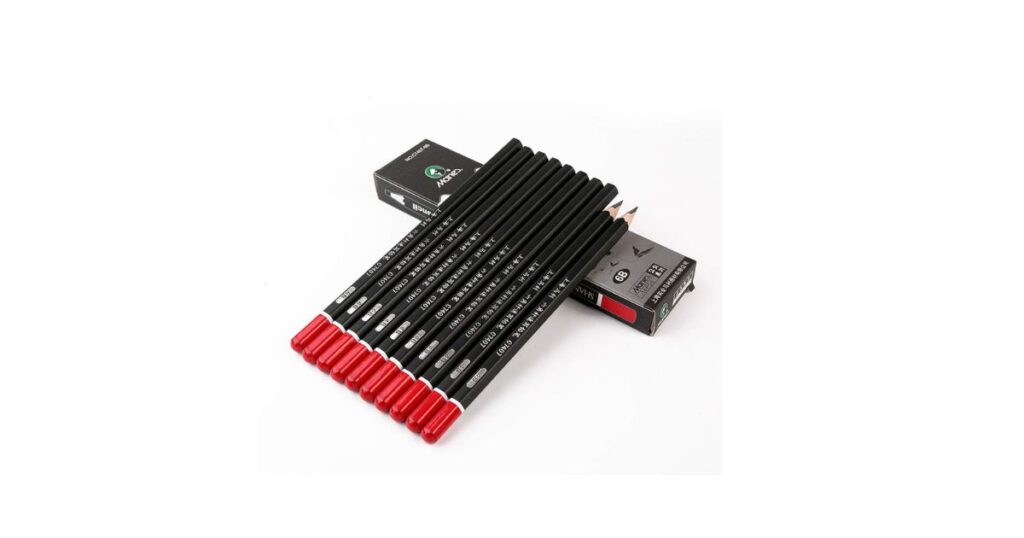
Flip a standard hexagonal pencil and look at its cross-section — the flat-to-flat distance across opposite sides measures right around 6mm. This is distinct from the corner-to-corner diagonal, which runs slightly larger.
Woodworkers and crafters quietly use pencils as improvised gap gauges all the time. Lay the flat side against a slot or channel and you’ve got a reliable 6mm check without reaching for a caliper.
5. 🪙 Four Stacked US Dimes
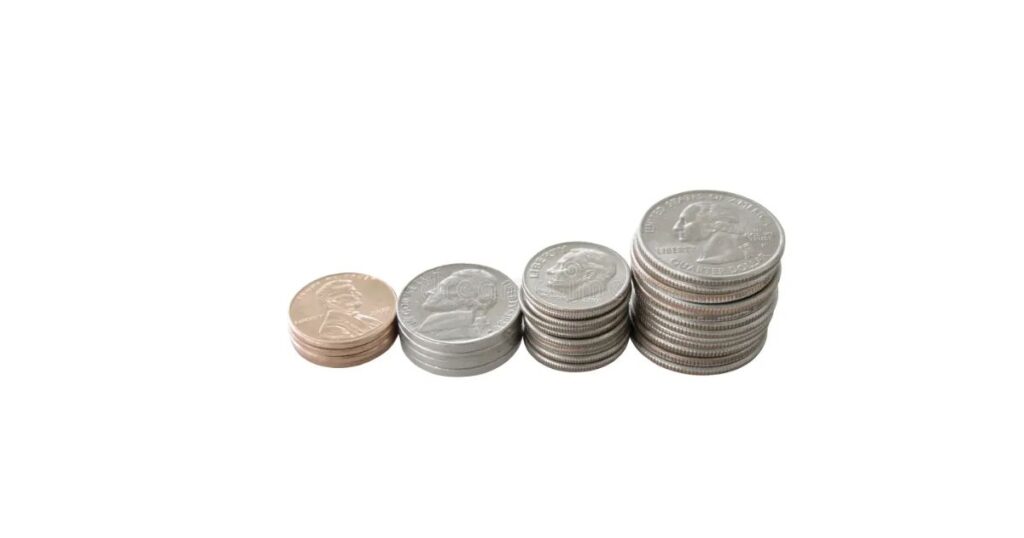
A single US dime is exactly 1.35mm thick — stack four and you hit 6mm with no rounding required. This is the cleanest, most reproducible 6mm reference in everyday life, and it works anywhere you have pocket change.
Machinists and woodworkers use coin stacks as informal go/no-go gauges when checking recesses, slots, or clearances. four dimes is the one worth memorizing permanently.
6. 🪙 Three Stacked US Nickels
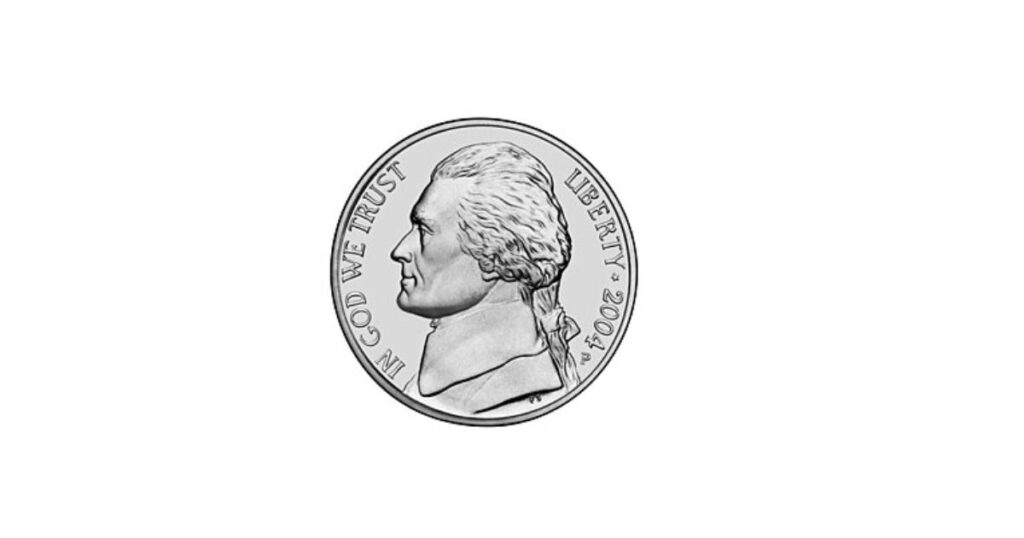
Three US nickels (each 1.95mm thick) stack to approximately 5.85mm — close enough to 6mm for visual estimation, though the six-dime method wins on precision. The nickel stack earns its spot because nickels are bulkier and easier to handle than dimes, making the stack more stable on a flat surface.
Use this when you need a quick eyeball check rather than a precise measurement.
7. 🟢 Small Green Pea
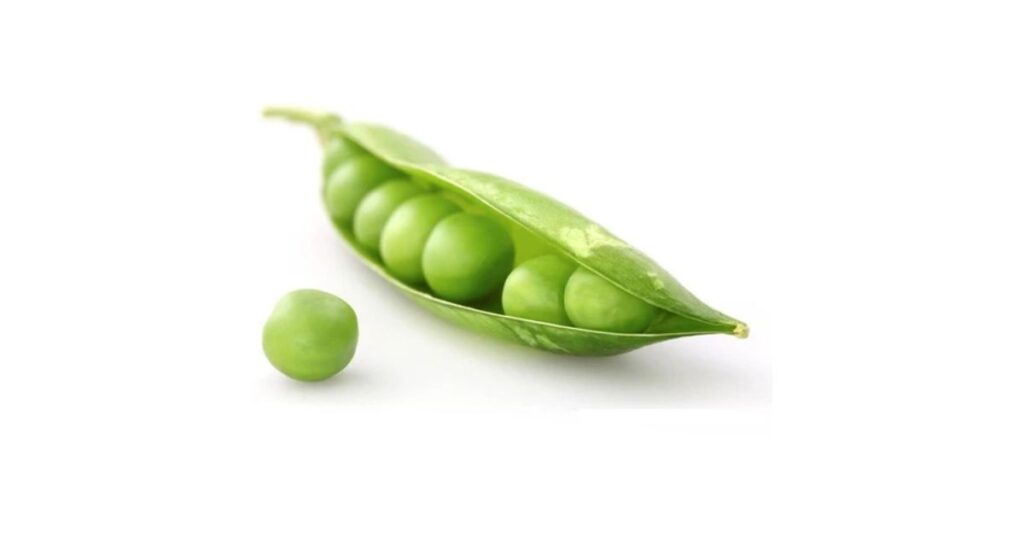
Oncologists and radiologists routinely use a small pea to represent the 6–10mm size range when explaining scan results to patients — a pea sits right at the lower end of that window. It’s a communication tool that turns an abstract number into something immediate and human.
If a doctor describes something as “smaller than a pea,” you’re hearing that it’s under 6mm. That single mental image removes a significant amount of anxiety from an otherwise clinical conversation.
Read also: How Big Is 50mm? 11 Common Things That Are 50mm (With Real Examples)
8. 🥤 Standard Drinking Straw
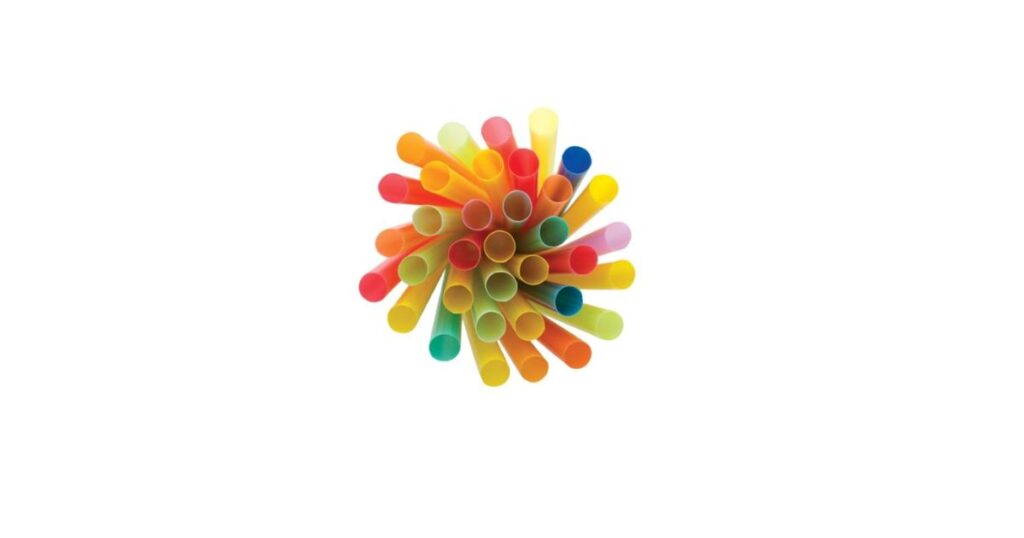
Most standard plastic and paper drinking straws carry an outer diameter of approximately 6mm. The inner bore runs slightly smaller, but the outer wall lands consistently at that 6mm mark across most major brands.
A short cross-section slice of a straw makes a perfect 6mm ring — useful as a physical template when drilling holes or punching circles in leather, foam, or craft paper.
9. 💍 Butterfly Earring Back Width
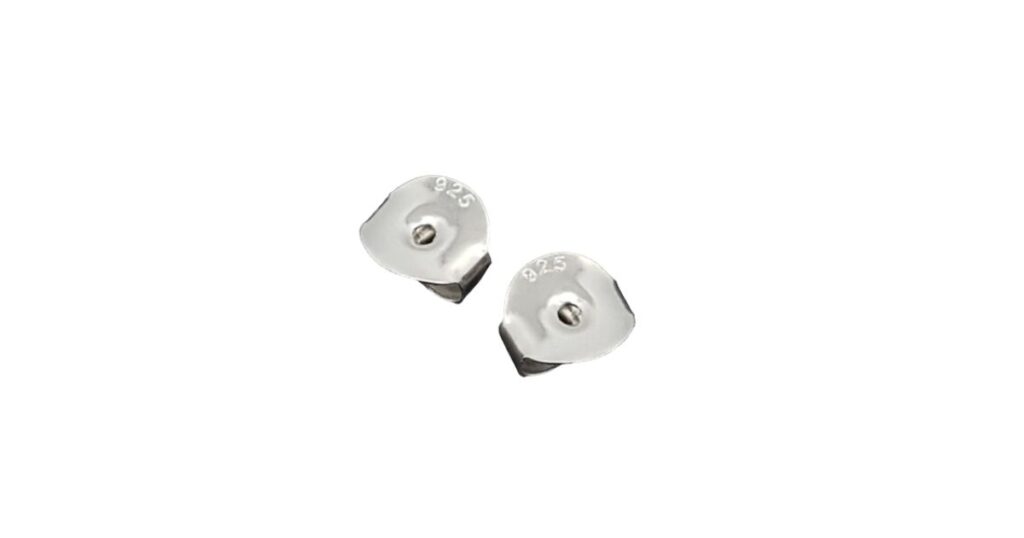
The butterfly (friction) earring back — the small metal wings that grip the post behind your earlobe — measures right around 6mm at its widest point. That width is deliberate: large enough to resist slipping through a pierced hole, small enough to stay invisible behind the ear.
When buying replacement backs online, confirming the 6mm width ensures a secure fit on standard posts. Ordering blind often lands you with backs that are either too tight to push on or too loose to hold.
10. 🧵 Drawstring / Braided Cord Diameter
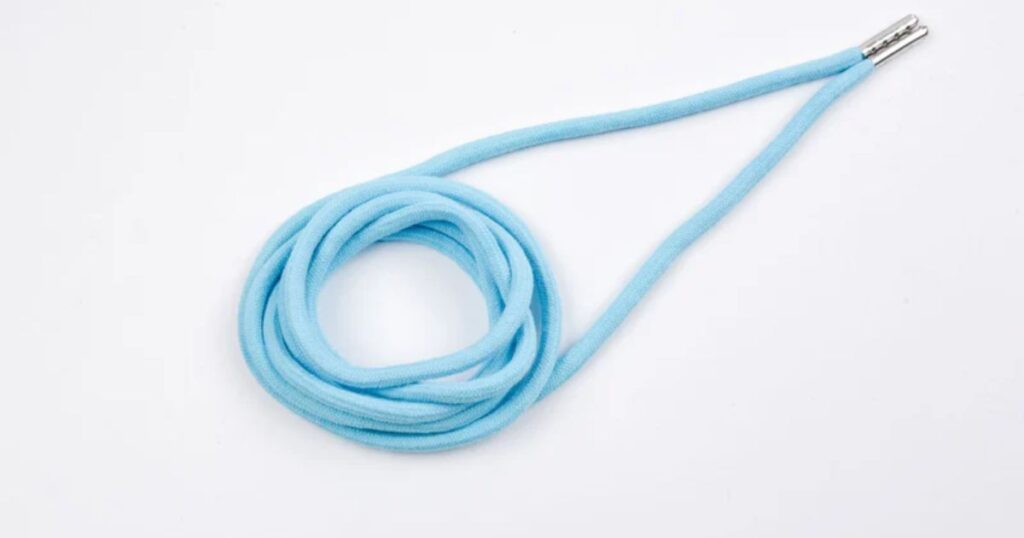
The cord running through a hoodie hood or sweatpants waistband is almost universally 6mm in diameter — it’s also the standard for beginner macramé projects. This size threads smoothly through fabric channels without bunching, and holds knots well without slipping.
When replacing a lost drawstring, 6mm braided cord from any fabric store will fit correctly. Grabbing 5mm or 8mm by mistake means either a floppy, loose cord or one you can’t thread through at all.
11. 🔘 Small Shirt / Craft Button
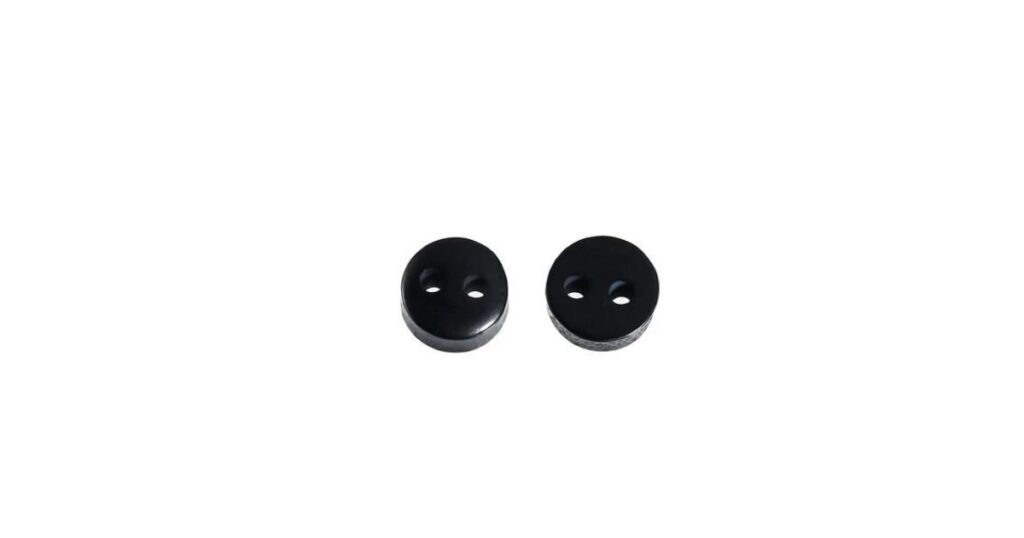
True 6mm buttons — sold as 10L in the button-sizing system — appear on fine blouses, baby garments, and doll clothing. They’re easy to overlook in a mixed button bag, which is exactly why measuring before you shop matters.
Before replacing a lost button on a delicate garment, measure one of the remaining buttons with a ruler or coin reference. A 1–2mm size difference looks subtle in the bag but reads as obviously wrong once sewn onto fabric.
Measuring 6mm Without a Ruler
Stack six dimes. One US dime = 1.0mm thick. Six dimes = exactly 6mm. Reproducible, free, and always in your pocket.
Use a pencil edge. The flat-to-flat width of a standard hexagonal pencil is ~6mm. Press it against a gap or slot as a quick physical check.
Cut a straw ring. A cross-section slice of any standard drinking straw gives you a 6mm circle — use it as a drilling or punching template.
Use your phone. The Measure app on iOS or the equivalent on Android gets close enough for non-precision tasks without any extra tools.
FAQs
What is 6mm in inches as a fraction?
6mm equals approximately 15/64 inch. For most practical purposes, rounding to “just under ¼ inch” (6.35mm) is close enough.
How big is 6mm compared to a dime?
A US dime is 17.91mm in diameter — about three times wider than 6mm. The more useful comparison: six dimes stacked equals exactly 6mm in height.
How big is 6mm on a tape measure?
Six small tick marks from any centimeter line. On a dual-scale tape, it lands just past the ¼-inch mark.
How does 6mm compare to 8mm?
8mm is roughly 33% larger — about the difference between a standard straw and a boba tea straw. Side by side, the difference is immediately obvious.
How big is 6mm in cm?
Exactly 0.6 cm. Divide any millimeter value by 10 to convert to centimeters.
Is a 6mm round gemstone considered small?
In jewelry, 6mm round is petite-to-medium — delicate enough for minimalist solitaires, substantial enough to hold visual presence as a center stone.
How big is 16mm compared to 6mm?
16mm is nearly three times larger — closer to the width of an adult thumbnail than anything in this list.
Key Takeaways
Six millimeters is precise, practical, and surprisingly common once you know where to look. The fastest mental lock: six stacked dimes = exactly 6mm, no tools required.
Whether you’re sourcing hardware, replacing jewelry findings, working a craft project, or processing a medical measurement — having a physical object in mind turns an abstract number into a confident decision.

I am the editor and author of StoriesRadius.com, a blog about measurements and dimensions. I enjoy turning numbers and sizes into simple stories that anyone can understand. From everyday objects to curious facts, I share clear guides based on real research and experience. My goal is to make learning about length, height, and size fun, useful, and easy for all readers.