You ordered a blanket online. It arrives, you unfold it, throw it on the bed — and it barely reaches the sides. Or maybe it pools on the floor like a curtain. Either way, you’re annoyed. And it was completely avoidable.
Twin size blanket dimensions confuse people mostly because the label says “twin” but nobody tells you what that actually means in real inches or centimeters. Let’s fix that right now.
The Number You Need First
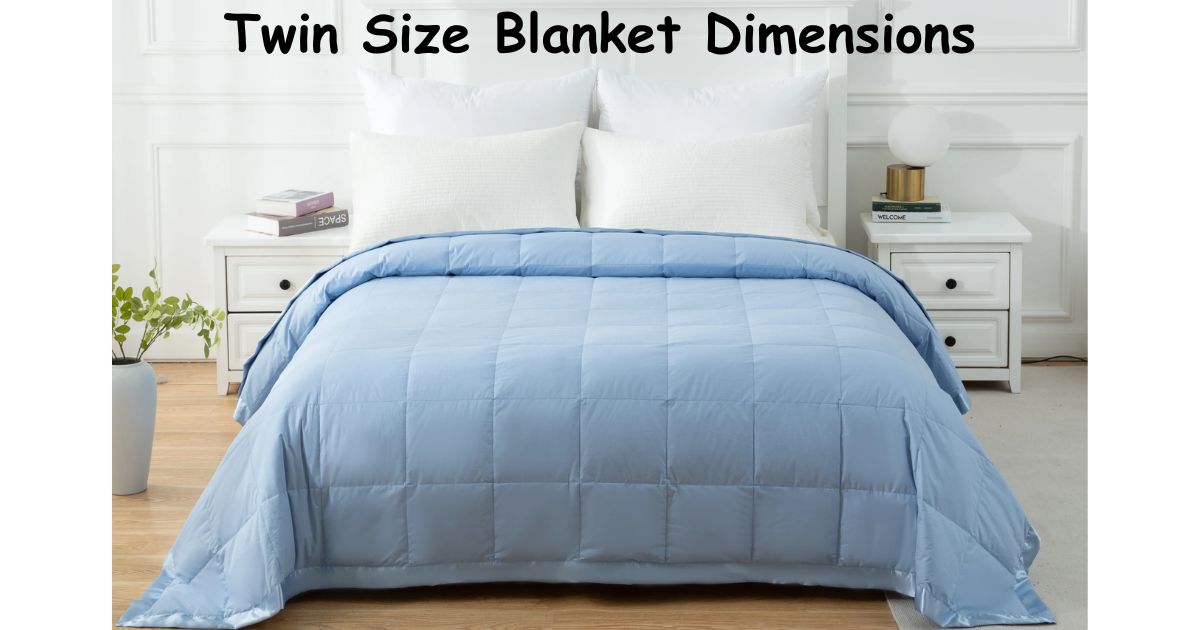
A standard twin blanket is 65 inches wide by 90 inches long. In centimeters, that’s 165 cm x 229 cm.
That’s the baseline. Most brands land somewhere in that range. Some go to 66 x 90, others to 68 x 90 — small variations, but nothing dramatic. When a listing just says “twin size” without actual measurements? That’s when problems happen.
The mattress underneath is 38 x 75 inches (97 x 191 cm). The blanket is intentionally much bigger. That extra fabric is what gives you the drape on the sides and the tuck at the foot.
Why the Overhang Numbers Actually Matter
Place a 65 x 90 blanket on a 38 x 75 mattress and here’s what you get:
- Roughly 13 inches of drape on each side
- About 15 inches hanging off the foot
That’s comfortable. Not excessive, not skimpy. The blanket sits naturally, tucks if you want it to, and doesn’t drag on the floor collecting dust.
Here’s what disrupts all of that: mattress thickness. Most sizing math assumes a mattress around 8–10 inches deep. But modern foam and hybrid mattresses often run 12, 14, even 16 inches. Every extra inch of mattress height eats into your side drape. A 14-inch-deep mattress with a standard 65-inch-wide blanket leaves you with almost no overhang at all — the blanket just barely wraps the top.
If your mattress is thicker than 12 inches, go for a 68–70 inch wide blanket (173–178 cm). Same length, just more width. It solves the problem completely.
Twin vs. Twin XL — Five Inches That Make a Real Difference
This is where most dorm shoppers go wrong.
A standard twin mattress is 75 inches long. A twin XL — the one in nearly every college dorm — is 80 inches long. Same width, just 5 extra inches of length.
A regular 65 x 90 blanket will technically cover a twin XL mattress. But “technically” and “comfortably” aren’t the same thing. If you like tucking the blanket under the foot of the mattress, you won’t have enough length. If you’re tall, your feet will likely be exposed.
The fix is simple: grab a twin XL blanket at 65 x 95 inches (165 x 241 cm). Width stays the same. Just the length changes. Not a big deal to find, and it makes a noticeable difference every single night.
Blanket Size Comparison (When You’re Deciding Whether to Size Up)
| Blanket Type | Inches | Centimeters | Works Best For |
| Twin | 65 x 90 | 165 x 229 | Single beds, kids, solo adults |
| Twin XL | 65 x 95 | 165 x 241 | Dorm beds, taller adults |
| Full / Double | 80–85 x 90 | 203–216 x 229 | Couples, wider frames |
| Queen | 90 x 90–100 | 229 x 229–254 | Shared adult beds |
| King | 108 x 90–100 | 274 x 229–254 | Large beds |
| Throw | 50 x 60 | 127 x 152 | Couch, lap, travel |
One thing worth noticing: a throw is a completely different product. It’s not a bed blanket. A lot of listings blur this line, especially when photos are taken from above and scale is hard to judge. Always read the actual dimensions — not just the name.
Read also: King Size Pillow Dimensions: The Real Answer You’re Looking For
What Fabric Does to the Size Over Time
The label gives you the pre-wash measurement. That’s not always what you end up with.
Cotton blankets are the most unpredictable. Wash one in warm water and tumble dry it, and a 65 x 90 can easily come out at 63 x 87. That’s three lost inches in length — enough to notice at your feet on a cold night.
Fleece and microfiber hold their shape much better through regular washing. Wool can shrink dramatically and even change texture if washed incorrectly — cold water and air drying only, always.
A practical workaround: if you’re buying cotton and you know you’ll machine dry it, buy one that’s 68 x 92 inches to start. After a few washes, it’ll settle closer to the standard 65 x 90. Crafters who sew their own blankets do this routinely — they cut two extra inches into the length specifically as a shrinkage buffer.
Beds That Don’t Follow Standard Rules
Bunk Beds
The dimensions still work, but long overhangs become a problem. Fabric hanging off the side of a bunk is a safety issue for kids and just looks messy. A slightly shorter blanket — around 65 x 84 inches — fits a bunk bed much better. Easier to make the bed too.
Trundle Beds
These slide under another frame, which means a bulky or oversized blanket creates friction and bunching. Something around 63 x 90 inches works cleaner and pulls out without getting caught.
RV Twin Beds
RV mattresses don’t follow household sizing rules at all. Many RV twin beds measure 28 x 75 inches — significantly narrower than a standard twin. A 60 x 85 inch blanket fits better in that context. If you’re outfitting an RV, measure the actual mattress before buying anything.
US Twin vs. European Single
If you’re shopping from a European brand or ordering internationally, the sizing shifts.
A European single blanket typically runs 140 x 200 cm — that’s approximately 55 x 79 inches. Shorter and narrower than a US twin (165 x 229 cm). European mattresses tend to be shallower, so the blanket proportions reflect that.
The centimeter numbers look close enough that it’s easy to assume they’re equivalent. They’re not. A 140 x 200 blanket on a US twin mattress will feel noticeably small on all sides. Always check the actual cm dimensions before ordering from international listings.
For Anyone Making a Blanket From Scratch
Target a finished size of 65 x 90 inches (165 x 229 cm).
If you’re sewing, cut your fabric at 67 x 92 inches — that extra inch on each side accounts for seam allowance. If you’re knitting in worsted weight yarn, roughly 120 cast-on stitches gets you to about 65 inches of width. You’ll need around 140 rows to reach 90 inches in length, though your row gauge matters — always swatch first.
One thing worth building in regardless of method: add 2 inches of extra length from the start. After blocking, washing, and a few uses, blankets almost always lose a little in length. That buffer keeps your finished piece at the right size long-term.
What People Usually Get Wrong
Reading the bed size instead of the blanket size. Knowing you have a twin bed is only step one. The actual blanket dimensions on the listing are what you need to check — brands vary by several inches even within “twin” labeled products.
Skipping the mattress depth check. Depth is just as important as length and width. A thick mattress changes the whole drape situation.
Assuming all twin blankets are the same. A comforter, a quilt, a fleece blanket, and a cotton blanket can all be labeled “twin” while measuring slightly differently. Some comforters run wider; some quilts run shorter. Actual numbers always win over labels.
Read also: Tacoma Bed Dimensions: Every Generation’s Real Numbers and What Actually Fits
Straight Answers to the Questions People Actually Ask
What are twin size blanket dimensions in cm?
165 cm wide by 229 cm long. That’s the standard. Some brands go up to 178 x 229 cm depending on the material and style.
What’s the difference between twin and throw size?
Significant. A throw is 127 x 152 cm — it’s made for a couch, not a bed. Using a throw as a bed blanket means cold feet and exposed sides every night.
Can a twin blanket work on a full size bed?
It’ll cover the top of the mattress but won’t drape over the sides at all. If someone’s sharing the bed, it’ll be a constant tug situation. A full/double blanket (203–216 x 229 cm) is the right call there.
Does a twin blanket shrink?
Cotton ones do, especially with heat drying. Expect to lose 1–3 inches in length. Buy slightly oversized or wash cold and air dry to hold the original size.
What’s the right twin blanket size for a thick mattress?
Go for 68–70 inches wide (173–178 cm) if your mattress is 12 inches or deeper. Standard 65-inch width won’t give you meaningful side coverage on a thick mattress.
The Part That Actually Decides Everything
All of this comes down to three checks before you buy anything:
Width — at least 65 inches (165 cm) for a standard twin. More if your mattress is thick.
Length — 90 inches (229 cm) for a standard twin. 95 inches (241 cm) if the bed is twin XL.
Mattress depth — the number most people skip entirely. Measure it once and you’ll never buy the wrong blanket again.
The rest — the fabric, the weight, the pattern — all of that is personal preference. But if the dimensions are off, none of those other details matter. Get the numbers right first, and everything else is just picking what you like.

I am the editor and author of StoriesRadius.com, a blog about measurements and dimensions. I enjoy turning numbers and sizes into simple stories that anyone can understand. From everyday objects to curious facts, I share clear guides based on real research and experience. My goal is to make learning about length, height, and size fun, useful, and easy for all readers.