You’re standing in your bathroom with a tape measure, second-guessing everything.
The contractor said “standard tub.” The plumber said “check the rough-in.” The store website listed four different sizes for what looked like the same tub. And now you’re not sure if the one you liked online will even fit through the hallway.
This happens to almost everyone. Bathtub sizing sounds simple until you’re actually buying one.
The Number Most People Start With — And Why It’s Not Enough
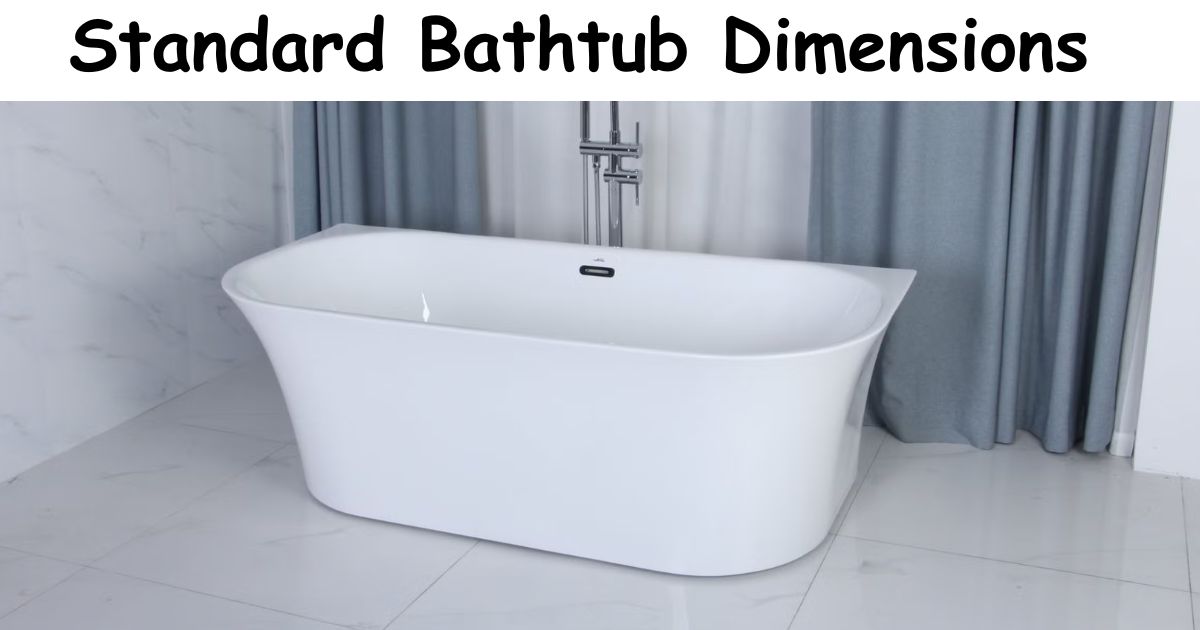
Sixty inches. That’s the length everyone quotes, and it’s a real starting point. The most common alcove bathtub in American homes measures 60 inches long, 30–32 inches wide, and 14–16 inches tall at the rim.
But that 60-inch number is the outside of the tub.
The interior basin — where your body actually sits — shrinks by 2 to 4 inches on each side because of wall thickness. You might buy a 60×30 tub and discover you’re soaking in something closer to 56×26 inches. For most adults, that’s fine. For anyone over six feet tall, it starts feeling tight fast.
Water depth is the other number worth knowing. When filled to the overflow drain, most standard tubs hold about 14 to 20 inches of water — roughly 40 to 50 gallons. That’s enough to cover your shoulders if you slide down, but it’s not a deep soak by any stretch.
Why the Tub Type Changes Everything
People shop for tubs like they’re all variations of the same thing. They’re not. The type you choose controls the size range you’re working with — and the kind of bathroom you need.
Alcove Tubs
Three walls, one open side for the shower curtain or door. This is what most homes have, and the 60x30x14–16 inch model fits a standard 5×8 foot bathroom without any surprises. Smaller 54-inch versions work well in tighter spaces. The 66-inch option is worth looking at if anyone in the household is tall — that extra 6 inches removes a lot of awkward knee-bending.
Freestanding Tubs
These sit out in the open and range from 55 to 72 inches long, with rim heights of 24 to 30 inches — much taller than an alcove tub. That height is part of the aesthetic, but it means stepping over more to get in. They need open floor space and look out of place in small bathrooms.
Drop-in and Corner Tubs
Drop-ins sit inside a custom-built deck and run anywhere from 45 to 72 inches long. The deck itself takes up more room than the tub, so the total footprint is larger than it looks online. Corner tubs occupy a diagonal space of roughly 60×60 inches — they seem like space-savers but actually eat more floor than most people expect.
Walk-in Tubs
Designed for accessibility, these measure 48–60 inches long with a door cut into the side. The step-in height drops to just 3–7 inches, which is the whole point. The trade-off: you get in, close the door, fill the tub, then drain it before stepping out again. Not for everyone, but genuinely life-changing for the people who need them.
Soaking Tubs
Longer and deeper than everything else — typically 60 to 72 inches long with interior depths hitting 20 to 24 inches or more. They’re not the right fit for a family bathroom. For a primary suite where someone genuinely takes long baths, they’re worth considering.
Read also: Milk Crate Dimensions: The Complete Size Guide 2026
Full Size Reference by Type
| Type | Length | Width | Depth/Height | Floor Space Needed |
| Alcove | 54–60 in | 30–32 in | 14–18 in | Fits 5×8 ft bathroom |
| Freestanding | 55–72 in | 27–32 in | 24–30 in (rim) | Needs 6+ ft open area |
| Drop-in | 45–72 in | 30–36 in | 14–20 in | Depends on deck size |
| Corner | 60×60 in diagonal | 60 in | 18–22 in | Larger than it looks |
| Walk-in | 48–60 in | 28–32 in | 36–40 in (rim) | Similar to alcove |
| Soaking | 60–72 in | 30–40 in | 20–24+ in | Needs larger room |
Sizes in Metric and Feet
For anyone working on a floor plan, comparing international models, or using metric measurements:
| Dimension | Inches | Centimeters | Millimeters | Feet |
| Length | 60 in | 152 cm | 1,524 mm | 5 ft |
| Width | 30 in | 76 cm | 762 mm | 2.5 ft |
| Rim Height | 15 in | 38 cm | 381 mm | 1.25 ft |
UK tubs typically run longer — around 170×70 cm (67×28 inches) — built more for lying flat and soaking than the American alcove design. Japanese soaking tubs go the opposite direction: compact footprint, extreme depth. Usually 40–55 cm wide and 55–75 cm deep, designed for sitting upright in hot water rather than lying back.
What Material Does to Your Install
The tub itself is only part of the equation. What it’s made from affects how heavy it is, how long the water stays warm, and whether your bathroom floor can actually support it.
| Material | Weight | Heat Retention | Price Range |
| Fiberglass | Very light | Poor | $150–$500 |
| Acrylic | Light | Good | $200–$700 |
| Solid Surface | Moderate | Good | $800–$2,000 |
| Cast Iron | Very heavy | Excellent | $1,100–$7,000+ |
Acrylic is the practical choice for most people — light, easy to install, available in almost every size. Cast iron holds heat so well that your water stays warm for a full bath, but a large cast iron tub can weigh over 300 pounds before you add water. On an upper floor, that needs a structural check first.
The Things That Actually Cause Problems at Install
Most bathtub regrets aren’t about the tub itself. They’re about something that could’ve been caught with 20 minutes of planning.
Drain placement. Alcove tubs come with the drain on the left, right, or center. It has to line up with your existing pipes. Moving drain location costs anywhere from $400 to $1,900 depending on how far it needs to move. Always check this before ordering.
Door clearance. A 30-inch-wide tub needs to be angled through a doorway. Most bathroom doors are 24–30 inches wide. It’s usually doable, but it’s worth visualizing — or even testing with cardboard — before the delivery truck shows up.
Floor load. A large soaking tub filled with water can exceed 500 pounds. Most ground-floor bathrooms handle that fine. Upper floors need a quick check of the joist spacing to confirm they can take the weight.
Plumbing rough-in. Standard alcoves need 2×10 framing around the nook. Freestanding tubs need plumbing brought up through the floor rather than the wall. If your plumbing isn’t already set up that way, that’s extra cost.
Read also: Kitchen Trash Can Size: Guide to Find the Right Fit for Your Kitchen 2026
What People Get Wrong About Size
Bigger doesn’t always feel better. A deeper tub sounds luxurious until you realize it takes 80+ gallons to fill and your water heater runs out halfway through. Deeper tubs spike water and heating costs by 20–30% compared to a standard fill.
“Standard size” doesn’t mean it will fit. Even a perfectly standard 60×30 tub needs correct drain placement, proper rough-in dimensions, and room to maneuver during installation. Standard size reduces the chance of problems — it doesn’t eliminate them.
Interior dimensions matter more than exterior ones. That bears repeating because store listings almost always show exterior measurements. The usable bathing space is smaller. For taller people especially, checking interior basin length before buying saves a lot of frustration.
Small tubs aren’t a punishment. A 48-inch alcove in a small bathroom often feels more comfortable than a 60-inch tub that crowds everything else. Proportion matters more than raw size.
Quick Answers to Common Questions
What’s the standard bathtub size in feet?
Right around 5 feet long, 2.5 feet wide, and just over 1 foot to the rim. That covers the most common alcove tub sold in the U.S.
What counts as a small bathtub?
Anything under 54 inches long. These start at 48 inches and work well in bathrooms under 50 square feet.
What’s the standard bathtub height?
For alcove tubs, the rim sits 14–20 inches off the floor. Freestanding models sit much higher — 24 to 30 inches — which affects how easy they are to step into.
Can a tall person use a standard tub?
At 60 inches, someone over 6 feet will feel cramped. A 66-inch alcove or a longer soaking tub is a much better fit.
How much does a standard bathtub cost?
A basic 60-inch acrylic alcove runs $200–$700. Installation adds $100–$2,000 depending on complexity. Cast iron or oversized models push costs significantly higher. Walk-in tubs run $2,200–$8,700 because of the door mechanism and safety features built in.
Where to Actually Start
Forget the brands and finishes for a moment.
Measure your bathroom first — wall to wall, and note where the drain is. Then decide on tub type based on how the bathroom gets used, not how something looks in a showroom. After that, check material weight against your floor situation. Everything else is preference.
The tub that fits your space, matches your plumbing, and gets used every day without complaints — that’s the right one. Size is the foundation of that decision. Get it right and the rest of it becomes easy.

I am the editor and author of StoriesRadius.com, a blog about measurements and dimensions. I enjoy turning numbers and sizes into simple stories that anyone can understand. From everyday objects to curious facts, I share clear guides based on real research and experience. My goal is to make learning about length, height, and size fun, useful, and easy for all readers.