Picture this. You find a great deal on military surplus cans — three different sizes sitting on a folding table, no labels, and the seller just shrugs when you ask which one holds 5.56. You grab the one that looks right. Get home. It’s either too small or weirdly huge for your shelf.
That’s the most common ammo can mistake. And it’s entirely avoidable.
The Naming Thing Confuses Everyone First
Ammo cans are named after what the military originally packed inside them. A .30 cal can held .30 caliber rounds. A .50 cal can held .50 caliber ammunition. That’s it. That’s the whole system.
But here’s what trips people up — those names have almost nothing to do with what you should store inside them. They’re just size nicknames at this point. A .30 cal can holds 9mm just fine. A .50 cal can swallows .223 rounds by the hundreds. The name is a label, not a rule.
Once that clicks, everything else gets easier.
Who Actually Needs This Information
Three types of people search for ammo can sizes, and they each need something slightly different.
The range shooter wants to know what fits, how heavy it’ll be, and whether it’s easy to carry. They’re not building a storage system — they’re packing for Saturday morning.
The bulk storage person is thinking long-term. Shelf space, stacking, moisture control. They want to know which size makes sense to buy six of and line up in a closet.
The repurpose crowd — campers, preppers, DIY people — doesn’t care about ammo at all. They want a tough, waterproof box and they’re curious whether a military can is actually worth it over a plastic tote.
All three people need dimensions. The rest depends on their situation.
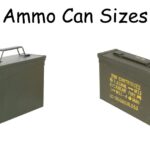
The Four Sizes You’ll Actually Encounter
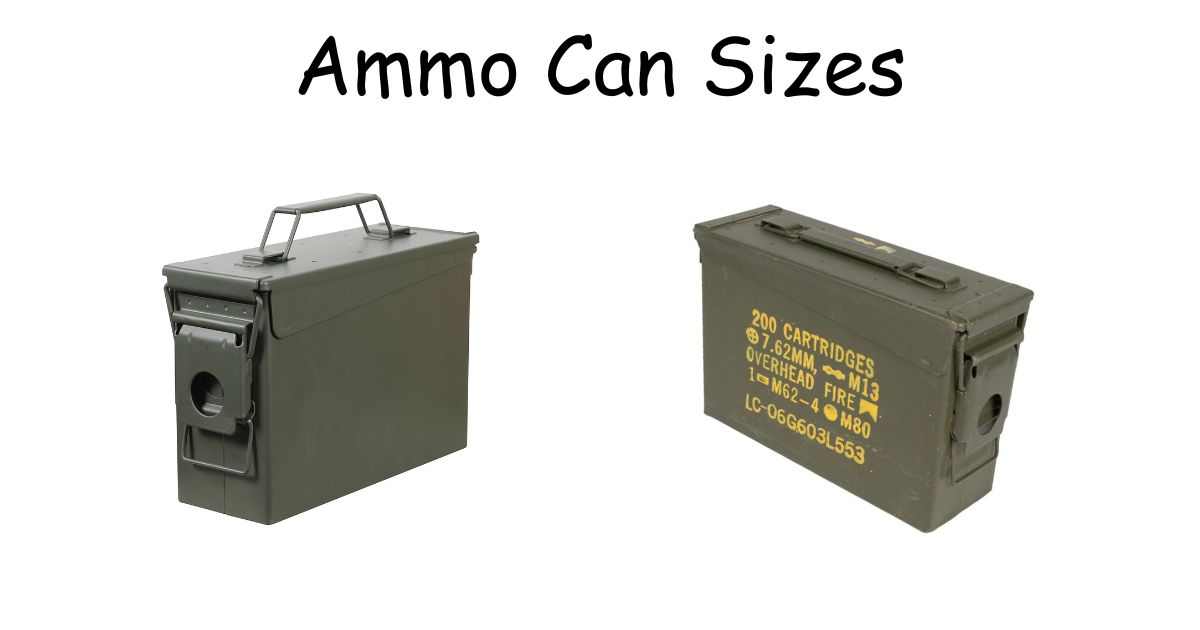
.30 Cal (M19A1) — The One You Carry
Exterior: 11.75 x 3.75 x 7 inches Interior: 10 x 3.5 x 6.5 inches Empty weight: 3.7 lbs
This is the slim one. Narrow enough that it almost looks wrong next to the others. But that slim profile is exactly what makes it useful — it slides into a range bag, sits on a truck seat, and carries one-handed without any strain.
Loose round estimates:
- 5.56 / .223 — about 600 rounds
- .308 / 7.62 — around 320 rounds
- 9mm — roughly 1,200 rounds
- .45 ACP — around 770 rounds
- 12 gauge shells — about 140
Stacking rounds instead of just pouring them in bumps those numbers up around 15%. Worth doing if you’re tight on space.
Good for: range trips, vehicle storage, geocache boxes, small emergency kits.
.50 Cal (M2A1 / M2A2) — The Default Choice
Exterior: 11.75 x 6 x 7.5 inches (roughly 30 x 15 x 19 cm) Interior: 11 x 5.5 x 7 inches Empty weight: 5.2 lbs
When someone says “ammo can” without specifying, this is almost always what they mean. It’s the most common size in circulation and the one most shelves and lockers are sized to fit.
Loose round estimates:
- 5.56 / .223 — about 1,200 rounds
- .308 / 7.62 — around 640 rounds
- 9mm — roughly 2,200 rounds
- .40 S&W / 10mm — around 1,750 rounds
Interior volume sits around 400 cubic inches — enough for a loaded mag, a desiccant pack, and a paper label alongside your ammo.
One thing worth knowing: the M2A2 version has a rear latch bracket that the M2A1 doesn’t. That bracket improves the seal when cans are stacked under weight. If you’re building a stacking system, look for M2A2 specifically.
Good for: home storage, safe organization, bulk buying, general-purpose use.
Read Also: Paint Can Sizes: The Only Guide You Need Before You Buy
20mm (M548) — When You Need Real Volume
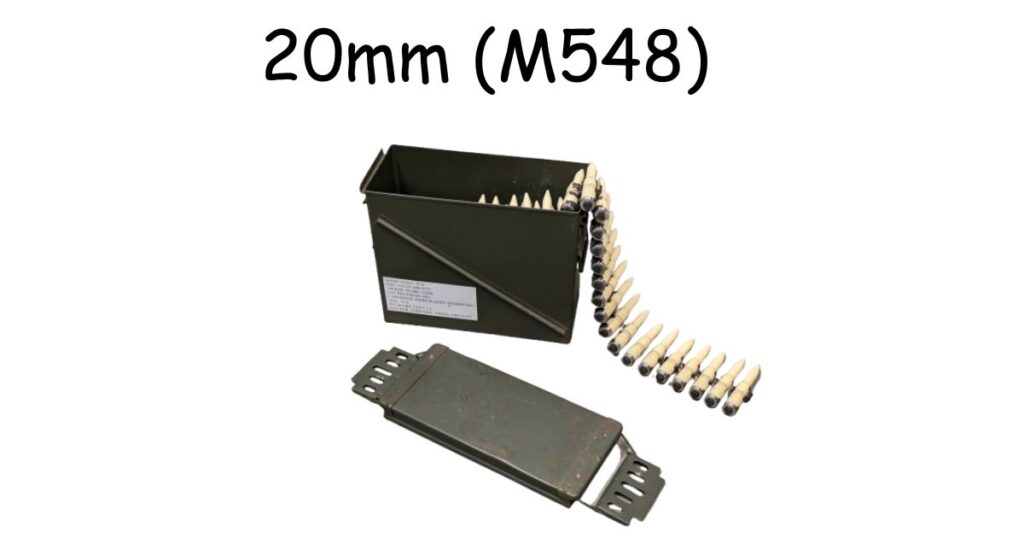
Exterior: 18.75 x 8.5 x 14.5 inches Interior: 17.25 x 7.5 x 14 inches Empty weight: 19.8 lbs
This is a big can. Interior volume hits around 2,000 cubic inches — five times the space of a .50 cal. It holds up to 1,500 rounds of 5.56 or 7.62, which sounds great until you remember it also weighs close to 40 lbs when full.
It’s not a grab-and-go option. This one lives on a shelf or in a truck bed and stays there. People building AR setups like it because there’s room for spare parts, tools, and ammo all in the same sealed container.
NSN: 8140-00-739-0233
Good for: stationary bulk storage, workshop organization, truck bed setups.
40mm (M116A2) — The Odd One Out
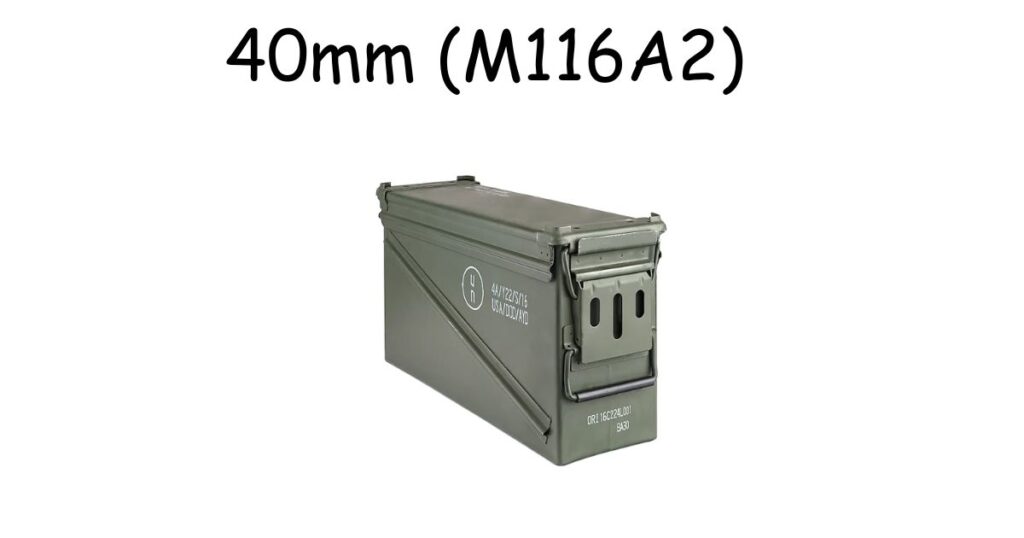
Exterior: 18.25 x 6 x 9.75 inches Interior: 17.25 x 5.5 x 9.5 inches Empty weight: 14 lbs
Nobody expects this shape. It’s tall and narrow — almost like a toolbox that got stretched vertically. For bulk ammo storage it’s awkward. For everything else, it’s surprisingly practical.
Campers figured this out fast. The 40mm’s tall interior fits cooking pots, a small stove, utensils, and spice containers with room left over. Seal the lid and you’ve got a waterproof camp kitchen that costs less than most gear bags.
Same NSN as the 20mm: 8140-00-739-0233
Good for: camp kitchens, long tools, rolled documents, specialty storage.
Size Comparison at a Glance
| Can | Exterior (inches) | Interior (inches) | Empty Weight | Interior Volume |
| .30 Cal M19A1 | 11.75 x 3.75 x 7 | 10 x 3.5 x 6.5 | 3.7 lbs | ~228 cu in |
| .50 Cal M2A1 | 11.75 x 6 x 7.5 | 11 x 5.5 x 7 | 5.2 lbs | ~400 cu in |
| 20mm M548 | 18.75 x 8.5 x 14.5 | 17.25 x 7.5 x 14 | 19.8 lbs | ~2,000 cu in |
| 40mm M116A2 | 18.25 x 6 x 9.75 | 17.25 x 5.5 x 9.5 | 14 lbs | ~900 cu in |
Dimensions reflect standard mil-spec builds. Small variation exists between manufacturers.
Plastic Cans — Honest Take
MTM Case-Gard makes the most popular plastic versions. No rust, lighter weight, often color-coded, and sealed with an O-ring gasket rather than rubber. For dry indoor storage they work well.
Two models worth knowing:
MTM AC30T — Outside: 11.3 x 5 x 7.2 in / Inside: 8.9 x 3.4 x 6.1 in. Holds about 550 rounds of .223.
MTM AC35 Bulk — Outside: 15.3 x 9.3 x 8.8 in / 707 cubic inches inside. Better for mixed gear or larger loads.
There’s also the MTM AC4C Crate — a carrier that holds four smaller cans, rated for up to 100 lbs total. Good if you want a portable, organized system rather than stacking loose.
Where plastic loses: it dents easier, and in rough outdoor conditions steel just holds up better. For a vehicle or bug-out bag, steel wins. For an organized closet shelf? Plastic is genuinely fine.
What Surplus Condition Labels Actually Mean
When buying used military cans, you’ll see Grade 1 and Grade 2 labels. Grade 1 means dent-free and clean. Grade 2 means cosmetic surface rust — structurally sound, but it needs some work.
Grade 2 cans are worth buying. Sand the rust, hit it with a rust-inhibiting paint, and they’re good for years. The only thing that actually determines whether a can is worth it is the gasket — that rubber seal around the lid edge. If it’s cracked, brittle, or missing, the can’s whole purpose is compromised.
Replacement gaskets cost under $10. It’s a ten-minute fix. But always check before paying Grade 1 prices for a Grade 2 gasket.
Quick seal test: Close the empty can, then submerge it in water lid-side up. Any bubbles mean the gasket is failing. No bubbles — you’re good.
Keeping Them Functional Long-Term
Steel cans rust from the inside out when stored in damp spaces. After any wet use, wipe the interior dry before sealing. Once a year, run a rust inhibitor like Fluid Film on the interior walls — takes five minutes and extends the life significantly. Store cans elevated off concrete floors; concrete draws moisture upward.
Don’t stack .50 cal cans more than four high. The gaskets on the bottom cans take real compression from the weight above. The M2A2’s rear bracket handles this better than the M2A1.
Swap out desiccant packs every six months if the can holds ammo or moisture-sensitive gear. Silica gel packs are cheap and the difference over a year of storage is real.
Prices and Where to Buy
Surplus .50 cal cans run $10–20 on sites like AmmoCanMan, depending on grade. New plastic MTM cans sit at $15–30 at most sporting goods retailers. Buying four 40mm cans bundled together often comes in under $100 — worth considering if you’re building a storage system rather than buying one at a time.
For larger cans, the NSN stamp (8140-00-739-0233 on 20mm and 40mm) confirms authentic mil-spec manufacture. Worth checking if you’re paying premium prices.
Read Also: How Tall Is a Beer Can? Exact Measurements by Size
Questions People Actually Ask
Which size fits most gun safe shelves?
The .50 cal. Its dimensions match most standard locker and safe shelf depths. Measure your shelf first — 12 inches of depth handles it comfortably.
Can I store different calibers in the same can?
Yes, but label everything clearly. Mixing calibers in one can isn’t dangerous — just confusing when you’re rushing at the range.
How many .50 cal cans fit on a typical shelf?
A 36-inch shelf holds three side by side with a little room to spare. Stack two high max unless the shelf is reinforced.
Do plastic cans seal as well as steel?
For dry indoor storage, yes. For submersion or extreme outdoor conditions, steel gaskets outlast O-rings over time.
What’s the easiest can to carry when full?
The .30 cal by a wide margin. Its handle placement and slim weight make it manageable even when fully loaded. A full .50 cal is a two-hand job for most people.
The Short Version If You’re Still Deciding
.30 cal — grab it for portability and range trips. .50 cal — buy it for home storage, it fits everything. 20mm — only if you’re storing serious volume and it’s staying put. 40mm — skip it for ammo, love it for camp gear.
The gasket matters more than the paint. Interior dimensions matter more than the name. And a $12 surplus can with a good seal beats a $30 one with a cracked gasket every single time.

I am the editor and author of StoriesRadius.com, a blog about measurements and dimensions. I enjoy turning numbers and sizes into simple stories that anyone can understand. From everyday objects to curious facts, I share clear guides based on real research and experience. My goal is to make learning about length, height, and size fun, useful, and easy for all readers.