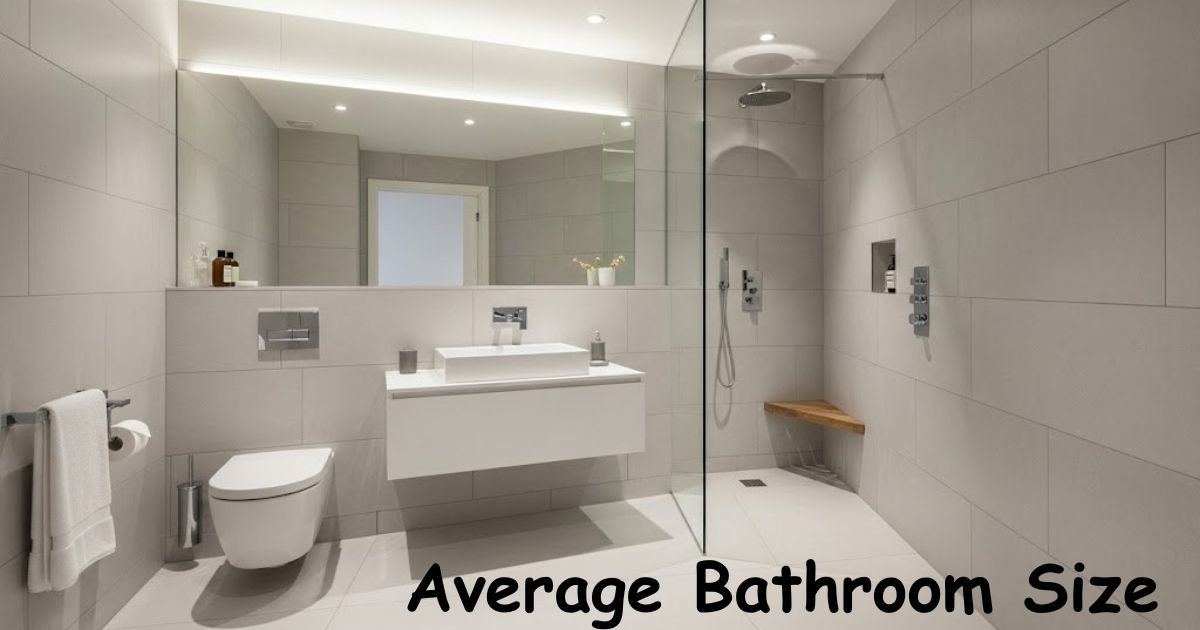
You’re standing in your bathroom with a tape measure, trying to figure out if what you have is normal — or if the new vanity you’re eyeing will even fit through the door. Maybe you’re planning a renovation. Maybe you just bought a house and the bathroom feels weirdly small. Maybe someone sent you a floor plan and you can’t picture it at all.
Whatever brought you here, the answer isn’t just a number. It’s context.
The Honest Starting Point
Most bathrooms in American homes fall between 40 and 60 square feet. That’s your full bathroom — toilet, sink, tub or shower. Not glamorous. Not spacious. Just functional.
But that range doesn’t tell the whole story, because not every bathroom is a full bathroom. A powder room near your front door is nothing like the one attached to your main bedroom. Size expectations shift completely depending on what the room is supposed to do.
So instead of one number, here’s the full picture.
How Size Changes by Bathroom Type
The Powder Room
No shower. No tub. Just a toilet and a sink for guests.
These run 3×5 to 3×6 feet — roughly 15 to 18 square feet. In metric, that’s about 0.9×1.5 meters. You’re not spending real time in here. The only challenge is making sure the door doesn’t swing open and hit the toilet. Pocket doors fix that problem completely.
The Three-Quarter Bath
Toilet, sink, shower — but no bathtub. Common in older homes as a secondary bathroom.
Typical size: 5×6 to 6×6 feet, or 30 to 36 square feet (roughly 1.5×1.8 meters). A 6×6 layout is where things start feeling workable. Fixtures line up along one wall, you have real turning space, and a 36×36 inch shower fits without drama.
The Full Bathroom
The classic setup — toilet, sink, and a tub with a showerhead above it.
Standard range: 5×8 to 6×10 feet, meaning 40 to 60 square feet. In centimeters, a 5×8 is approximately 152×244 cm, or about 3.7 square meters. This is what most homes built between the 1950s and 1990s contain. It works. It’s not roomy, but two adults can use it on alternating schedules without frustration.
The Master Bathroom
This one’s attached to the main bedroom and built around two people sharing a morning.
Starts at 8×10 feet (80 square feet) and typically runs 10×10 to 10×12 feet in newer homes — 100 to 120 square feet, or roughly 9 to 11 square meters. At that size, a double vanity, a walk-in shower, and a freestanding tub all fit without crowding each other. Anything above 150 square feet moves into high-end territory with separate zones, wet rooms, or heated floors.
Size Reference at a Glance
| Type | Dimensions (ft) | Sq Ft | Fixtures |
| Powder Room | 3×5 to 3×6 | 15–18 | Toilet + sink |
| Three-Quarter | 5×6 to 6×6 | 30–36 | Toilet + sink + shower |
| Full Bath | 5×8 to 6×10 | 40–60 | Toilet + sink + tub/shower |
| Guest Bath | 5×8 to 6×8 | 40–50 | Full or 3/4 setup |
| Master Bath | 8×10 and up | 100+ | Double vanity + tub + shower |
What “Small” Actually Looks Like
Small bathrooms get misunderstood constantly. People assume small means broken or unusable. It doesn’t — it just means you have to think more carefully about layout.
Here’s the real breakdown by use case:
Just a toilet and sink: 15 square feet is the floor. A 4×4 room fits, technically. But you’ll feel every corner. Not great for daily use. Fine for a basement or workshop.
Adding a shower into a small space: You need at least 30 square feet — a 5×6 room. That fits a toilet, a compact sink, and a 30×30 inch shower stall. The problem is that 30×30 is miserable for most adults. If you have even a few extra inches, push to 36×36. You can actually turn around. You can rinse without pressing against the wall.
The 6×6 layout (36 sq ft): This is the sweet spot for small bathrooms with a shower. Toilet, vanity, and shower stacked in a linear line along one wall. Add a pocket door and the room stops feeling like a utility closet.
The clearance rules matter more than the square footage here. You need 15 inches from the toilet centerline to any wall or obstacle on each side. You need 24 inches of open floor space directly in front of the toilet. Miss those numbers and the room feels wrong even if the total area looks fine on paper.
Read also: Cornhole Board Dimensions: Complete Guide to Regulation Size, Hole Placement & DIY Build
Bathrooms With Showers: The Minimum Numbers
| Shower Type | Min Room Size | Notes |
| 30×30 in stall | 5×6 ft (30 sq ft) | Code-legal, not comfortable |
| 36×36 in stall | 5×6 to 6×6 ft (30–36 sq ft) | Practical minimum for daily use |
| Walk-in (48 in deep) | 6×8 ft (48 sq ft) | Comfortable, no door needed |
| Tub + shower combo | 5×8 ft (40 sq ft) | Standard full bath setup |
Walk-in showers need at least 48 inches of depth to feel genuinely open. A 48×48 inch walk-in is excellent for one person. Below that and you’re just calling a stall a walk-in.
Master Bathrooms: What the Space Actually Buys You
At 100 square feet, a master bath fits a 60-inch double vanity, a 36×48 inch walk-in shower, and a 60×30 inch freestanding tub with comfortable clearance around all three. That’s the baseline for a shared primary bathroom that doesn’t create morning arguments.
The tub question comes up constantly during renovations. Most people install one, use it rarely, and wish they’d used that footprint for a larger shower or better storage instead. If you genuinely take baths, keep it. If you’re keeping it because it seems like you should — that space could work much harder for you elsewhere.
Wet rooms — where the shower has no enclosure and the entire floor is waterproofed and drained — start becoming practical around 80 square feet. Below that, the layout gets complicated and the waterproofing costs outweigh the aesthetic.
Fixture Sizes You Need Before You Buy Anything
This is where renovations go sideways. People fall in love with a vanity online, order it, and discover it blocks the toilet or the door swing. Measure first.
| Fixture | Standard Size | Clearance Needed |
| Toilet | 20W × 28–30D in | 24 in front |
| Vanity / Sink | 24–48W × 20D in | 21–24 in front |
| Shower Stall | 36 × 36 in min | 24 in at entry |
| Bathtub | 60 × 30 in | 21–30 in front |
Ceiling height matters too — especially in basement bathrooms. You need at least 80 inches of clearance above any fixture. Standard rooms clear this easily. Converted spaces sometimes don’t.
Metric Conversions for Bathroom Planning
| Bathroom Type | Feet | Meters | Sq. Meters |
| Powder Room | 3×5 ft | 0.9×1.5 m | ~1.4 m² |
| Three-Quarter | 5×6 ft | 1.5×1.8 m | ~2.7 m² |
| Full Bath | 5×8 ft | 1.5×2.4 m | ~3.7 m² |
| Master Bath | 10×10 ft | 3×3 m | ~9 m² |
In centimeters: toilets need 76 cm of side clearance total, showers need a minimum of 76×76 cm, and standard vanities run 60 to 120 cm wide.
The Layouts People Get Wrong
Door swing kills small bathrooms. A standard door opens 24 to 28 inches into the room. In a 5×6 bath, that’s a quarter of your usable floor. Pocket doors, barn doors, or outward-swinging doors solve this — but you have to plan for it before the walls go up.
Double vanities in small full baths. A 48-inch double vanity in a 5×8 bathroom leaves around 12 inches between the vanity edge and the toilet. That’s not enough. It looks good in the showroom. It feels cramped every single morning.
Forgetting the linear flow. In small and medium bathrooms, fixtures should follow a single wall when possible. The toilet near the tub, the vanity across from it — this creates a center pathway that makes the room feel bigger than it is.
Thinking a 5×8 is too small to bother with. It’s not. Light colors, a large mirror, and a floating vanity can make a 40 square foot bathroom feel genuinely comfortable. The square footage isn’t the problem. A cluttered, dark, poorly lit layout is.
Read also: Fat Quarter Dimensions: Exact Sizes in Inches, CM & Meters Explained
Special Bathroom Types Worth Knowing
Jack-and-Jill bathrooms connect two bedrooms with a shared space — usually 40 to 60 square feet with doors on each side. Common in family homes with kids sharing a wall. A double sink makes the arrangement actually work day-to-day.
Basement bathrooms typically match a half-bath footprint due to structural limitations. They require an ejector pump if they sit below the main sewer line. Budget for that early — it’s not a surprise you want mid-project.
ADA-accessible bathrooms need a 60-inch clear turning circle for wheelchair movement, a 36-inch doorway minimum, and specific grab bar placement. Starting from scratch with ADA in mind costs far less than retrofitting later. Worth planning for if you’re building a forever home.
Answering the Questions People Actually Type In
What is the average bathroom size in feet?
A standard full bathroom is 5×8 to 6×10 feet — 40 to 60 square feet. That’s what most homes have.
What is the average bathroom size in meters?
Roughly 1.5×2.4 m to 1.8×3 m, or about 3.7 to 5.4 square meters for a full bath.
What is the standard bathroom size in cm?
A 5×8 foot bathroom is approximately 152×244 cm. Shower minimum: 76×76 cm. Standard tub: 152×76 cm.
What is the minimum bathroom size with a shower?
30 square feet technically meets code. For daily use, 36 square feet with a 36×36 inch stall is the realistic minimum.
What is a small bathroom size in feet?
Anything under 40 square feet. Powder rooms (15–18 sq ft) and three-quarter baths (30–36 sq ft) both fall here.
What is the master bathroom size in feet?
Starts around 8×10 feet. Most comfortable at 10×10 to 10×12 feet, or 100 to 120 square feet.
What to Actually Focus On
Square footage gives you a starting framework. Layout determines whether you enjoy the room.
Know your clearances before you design anything. Know your fixture sizes before you buy anything. Know your door situation before you frame anything.
A bathroom that’s 40 square feet with smart layout decisions will serve you better every day than a 70 square foot bathroom that’s poorly planned. The number on the tape measure is just the beginning.
What makes a bathroom genuinely good is that you never have to think about it. You walk in, everything’s where it should be, nothing feels tight, and you walk out. That’s the goal — and it has less to do with size than most people assume.

I am the editor and author of StoriesRadius.com, a blog about measurements and dimensions. I enjoy turning numbers and sizes into simple stories that anyone can understand. From everyday objects to curious facts, I share clear guides based on real research and experience. My goal is to make learning about length, height, and size fun, useful, and easy for all readers.