You measured your yard last weekend. Maybe you paced it out, maybe you used a tape measure. Either way, you’re now staring at a number and wondering — is this actually enough for a bocce court?
That question is more common than you’d think. And the answer is almost always yes — because bocce courts are far more flexible than the “official” specs make them sound.
The Number Everyone Starts With (And Why It Confuses People)
Search for bocce court dimensions and you’ll immediately hit 91 feet × 13 feet. That’s the regulation size. That’s what the United States Bocce Federation and the World Bocce Federation use for competitive tournaments.
It’s also not what most people need.
Ninety-one feet is roughly the length of a semi-truck plus a small car. Most backyards don’t have that kind of clear, flat space — and honestly, casual games don’t need it either. The regulation size exists so that competitive matches feel consistent across different venues. It’s not a requirement for having a great time with your family on a Saturday afternoon.
The confusion happens because people find that number first and assume it’s the minimum. It isn’t. It’s the maximum for serious play.
What Size Actually Works for a Backyard
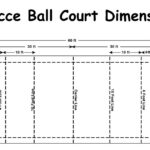
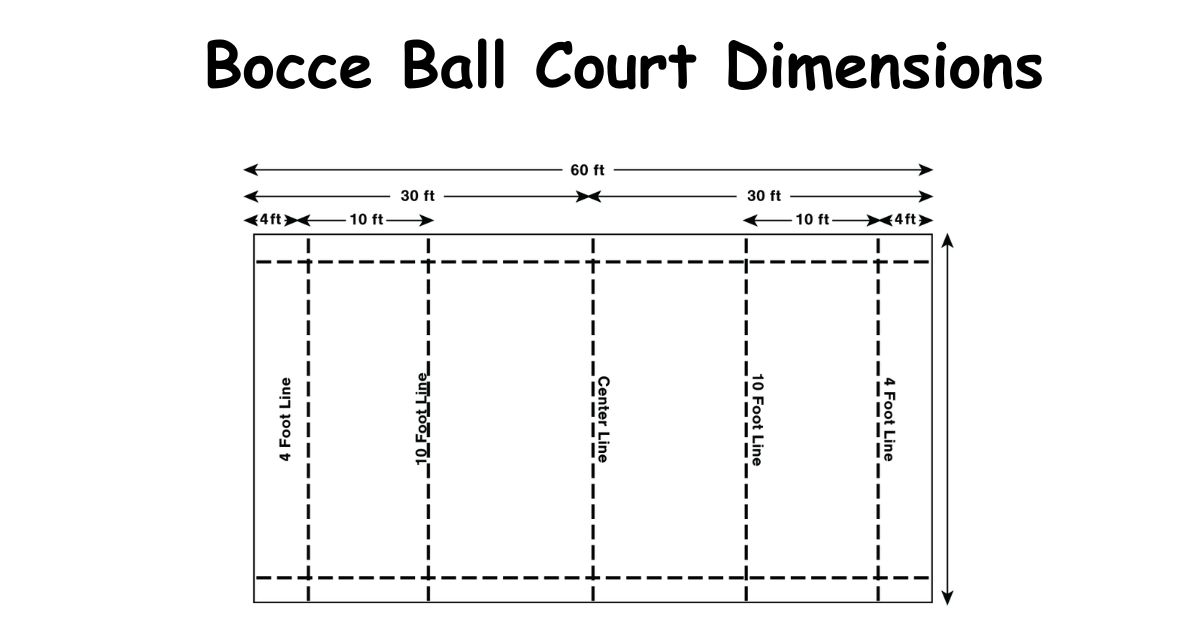
The sweet spot for home courts is 60 feet long by 12 feet wide — about 18.3 meters by 3.7 meters. This is what most people build. It fits in a typical yard, keeps the game feeling strategic, and doesn’t require you to own a football field.
Go shorter if you need to. A 40 × 10 foot court (12.2m × 3m) plays well for casual games. A 50 × 11 foot layout works perfectly fine too. There’s no magic number between 40 and 91 feet where the game breaks down.
What does matter at any length:
- Foul lines placed 10 feet from each end wall
- A centerline marked at the halfway point
- Consistent surface from end to end
Get those three things right and the exact footage becomes secondary.
Full Size Reference
| Court Type | Feet | Meters | Best For |
| Regulation | 91 × 13 | 27.7 × 4.0 | Tournaments, leagues |
| Backyard Standard | 60 × 12 | 18.3 × 3.7 | Most home builds |
| Compact | 40 × 10 | 12.2 × 3.0 | Small yards, families |
| Mini | 20–30 × 5–8 | 6–9 × 1.5–2.4 | Kids, patios, balconies |
Metric conversions use 1 foot = 0.3048 meters, rounded to one decimal.
When You’re Working in Inches
If you’re cutting lumber for a court frame, spray-painting lines, or ordering materials, feet don’t always help. Here’s the same information in inches:
- Regulation length: 1,092 inches
- Regulation width: 156 inches
- Backyard standard length: 720 inches
- Backyard standard width: 144 inches
- Foul line setback from end wall: 120–156 inches
These numbers matter most when you’re at the hardware store and someone asks you how long your boards need to be.
Read also: Chess Board Dimensions: Square Sizes, Tournament Standards & Piece Matching Guide
Tight Spaces: Mini Courts Actually Work
A 20-foot court sounds too short. It kind of is — for serious adult play. But for kids, apartment patios, or backyard parties where the court is one of several activities, it’s totally playable.
The smallest usable setup is around 20 feet long by 5 to 6 feet wide (6m × 1.5–1.8m). Scale the foul lines proportionally — about 4 feet from each end — and mark the center. Rolls are shorter, positioning matters less, but the game still works.
A 30 × 8 foot layout (9m × 2.4m) hits a better balance. It fits on most balconies and gives players just enough distance to feel like they’re making real decisions. PVC pipe or lightweight boards around the edges keep balls contained without a big construction project.
The Lines You Need to Mark (And What They Actually Do)
Most DIY courts skip proper markings and then spend the first three games arguing about throws. Three lines prevent almost all of that.
Foul lines sit 10 to 13 feet from each back wall. Players release the ball before crossing this line. Step over it and the throw doesn’t count. Simple.
The centerline runs across the middle. On the opening throw of each frame, the pallino — that small target ball — must cross this line or it gets thrown again. Without this rule, players could roll the pallino barely five feet and make every subsequent throw trivially short.
Side boundary lines define where dead balls go. A ball that fully exits the court is removed from play for that frame. No exceptions.
For a permanent setup, paint or stake these lines. For a casual backyard game, chalk or a length of rope works fine.
Quick Math: Figure Out Your Court Size Before You Build
You don’t need a specialized calculator. The math is straightforward.
For length: Think about how far you want players to throw to reach the scoring zone. Multiply that distance by 4. If 15-foot throws sound right, you want a 60-foot court. If your yard only gives you 40 feet, players will throw about 10 feet — still a real game.
For width: Take your length and divide by 5. A 60-foot court → 12 feet wide. A 40-foot court → 8 feet wide. This ratio keeps the proportions balanced so the court doesn’t feel like a hallway or a parking lot.
Surface: The Decision That Changes Everything
People spend a lot of time debating court length. The surface choice actually affects the game more.
Decomposed granite is the best starting point for most DIY builds. It compacts well, drains reasonably, and gives a smooth, predictable roll. Budget-friendly and widely available at landscape suppliers.
Crushed oyster shell is the traditional choice. Balls roll cleanly and consistently. It needs occasional raking and light watering to stay firm — skip that and it gets bumpy over time.
Synthetic turf is low-maintenance and looks clean year-round. More expensive upfront, but you won’t spend Saturday mornings raking. Good choice if the court doubles as a lawn area.
Packed clay or dirt works on a tight budget if you compact it properly. Heavy rain turns it soft, so it’s best in drier climates.
Grass is fine for a one-day setup. Beyond that, worn patches and uneven ground make the roll unpredictable. It’s a temporary solution, not a real surface.
One overlooked step: laying ultra-base panels under any surface before you fill it. They prevent soft spots and divots, and they extend the life of whatever goes on top. Not required, but worth the small extra cost on a permanent build.
Read also: Tacoma Bed Dimensions: Every Generation’s Real Numbers and What Actually Fits
Building Your Own Court Without Spending a Fortune
A professionally installed court runs $5,000 or more. A solid DIY build on a standard 60 × 12 foot layout costs around $600 to $700 total. Here’s how that breaks down.
The Frame
Sixteen 8-foot sections of 4×4 lumber, screwed together at corners and staked into the ground. This creates the border that contains balls and allows bank shots. Budget $200 to $300 depending on lumber prices in your area. Stain or seal the wood to extend its life.
The Base Layers
Clear the grass. Dig down 4 to 6 inches. Lay a weed barrier across the full area. Add 1 to 2 inches of compacted paver base, then 2 inches of decomposed granite or oyster shell on top. Total material cost usually runs $300 to $400.
If your yard sits in a rainy region, add drainage gravel at the bottom or dig a simple French drain along one edge before the base layers go in.
Compaction
Rent a plate compactor for around $50 a day. Run it over the finished surface until it’s flat and firm. This single step separates a court that plays well from one that develops ruts and soft spots after a few weeks. Don’t skip it.
Mark your lines, water lightly, let it settle overnight, and you’re done.
Where People Go Wrong
Assuming shorter means easier. Shorter courts are actually harder to play on in a different way — there’s less room to place the pallino strategically, and narrower widths demand precision. A cramped court isn’t a relaxed court.
Ignoring the surface until it’s too late. The frame and dimensions are visible. The base layers are invisible once everything’s filled in. Skimping on compaction or skipping the weed barrier shows up six months later as a bumpy, weedy mess.
Over-engineering for regulation specs. Unless you’re running a league or hosting tournaments, building a 91-foot regulation court in your backyard is overkill. You’ll use maybe 60 feet of it and the extra length just means more materials and more maintenance.
Skipping the centerline. It feels optional. It isn’t. Once you play a few rounds without it, someone will underthrow the pallino on purpose and the whole game unravels.
How Bocce Court Sizes Vary Around the World
The 91-foot standard is primarily American. Italian bocce — specifically the volo style, where players throw high arc shots rather than rolling — uses courts up to 100 feet long. It’s a different physical game that needs the extra distance.
Special Olympics bocce competitions standardize at 60 × 12 feet, which says something useful: that size works for serious, competitive, structured play without needing the full regulation length.
Portable bocce court mats — the kind you roll out at a park or beach — typically run 10 × 40 feet. They’re a compromise, but a convenient one for players without a permanent setup.
Keeping the Court in Good Shape
Rake the surface weekly. For crushed stone or granite, occasional light watering firms things back up after dry stretches. Synthetic turf just needs brushing a few times a year. Check your border frame once a season for rot or loose connections.
Budget about $50 a year for minor repairs and top-ups. Bring bocce balls indoors during winter — cold temperatures crack the material over time, especially with repeated freeze-thaw cycles.
Real Questions Worth Answering
Can you build on a slight slope?
Not ideally. Even a 2-inch drop over 60 feet affects ball direction noticeably. Level the ground before building, or pick a flatter section of your yard.
What’s the absolute minimum playable length?
Twenty feet. It’s short and won’t challenge experienced players, but the game works. Forty feet is a much more comfortable minimum for adult play.
Does width matter as much as length?
More than people think. A court under 8 feet wide removes most of the interesting positioning decisions from the game. Twelve feet is the comfortable standard for good reason.
Is a 60-foot court okay for competitive play?
Many organized leagues use 60-foot courts, not 91. Special Olympics uses 60 feet. It’s a real competitive length — just not the top-level regulation size.
The One Thing Worth Getting Right
Flat ground and a consistent surface beat perfect dimensions every time.
A 55-foot court on level, well-compacted decomposed granite will play better than a 91-foot court on patchy grass. Pick dimensions that fit your space, nail the surface preparation, mark your three lines clearly, and the game takes care of itself.
Everything else — exact footage, border height, specific materials — is adjustable. The flatness isn’t.

I am the editor and author of StoriesRadius.com, a blog about measurements and dimensions. I enjoy turning numbers and sizes into simple stories that anyone can understand. From everyday objects to curious facts, I share clear guides based on real research and experience. My goal is to make learning about length, height, and size fun, useful, and easy for all readers.