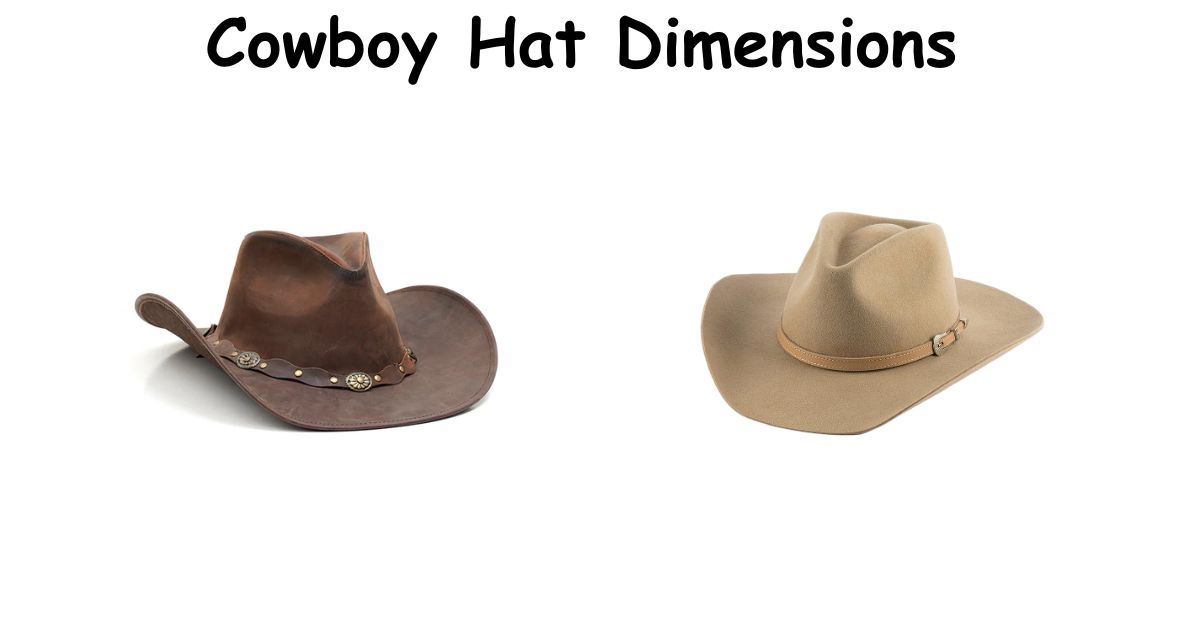
You picked up a cowboy hat in the store. It looked perfect on the rack. You put it on — and it sat two inches too high on your forehead like a cartoon. Or it fit fine in the store but gave you a headache an hour into wearing it.
That’s a dimensions problem. And it’s way more common than people think.
Getting the right cowboy hat isn’t just about style. The brim width changes how your face looks. The crown height changes how the whole hat carries. And the fit — the actual head measurement — determines whether you forget you’re wearing it or spend the day adjusting it every ten minutes.
Here’s everything broken down in plain terms.
Start With Your Head, Not the Hat
Most people skip straight to size charts. That’s the wrong move. Charts only work if your starting number is accurate.
Grab a flexible tape measure. Wrap it around your head — about half an inch above your eyebrows, level all the way around. Not tilted. Not loose. Snug like a comfortable band, not squeezing.
No tape measure? Use a shoelace or string, mark where it meets, then measure that length against a ruler.
One thing most guides skip: measure later in the afternoon. Heads actually swell slightly through the day from warmth and activity. A hat sized in the morning might feel noticeably tighter by evening. It’s a small difference, but it’s real.
Write down the number in inches. If you land between two sizes, go up. A slightly big hat can be tightened easily. A hat that’s too small just hurts.
The Size Charts (Adult and Youth)
Men’s and Women’s Cowboy Hat Sizes
| Head (in) | Hat Size | Label |
| 20 3/8 – 21 | 6 1/4 – 6 1/2 | XS |
| 21 1/4 – 21 5/8 | 6 3/4 – 6 7/8 | S |
| 21 3/4 – 22 1/2 | 7 – 7 1/8 | M |
| 23 – 23 3/8 | 7 1/4 – 7 3/8 | L |
| 23 3/4 – 24 | 7 1/2 – 7 5/8 | XL |
| 24 1/4 – 25+ | 7 3/4 – 8 1/8 | XXL+ |
The U.S. hat size number — like 7 or 7 1/4 — is actually the diameter of your head in inches. So a size 7 hat fits a head that’s 7 inches across. That’s why the numbers look strange compared to clothing sizes. They’re a real measurement, not an arbitrary label.
Most adult men land between 7 and 7 3/8. Most women fall between 6 7/8 and 7 1/4. But plenty of people sit outside that range, and that’s normal.
Youth Sizes
Kids’ heads grow fast. Measure every season if you’re buying for a child — don’t assume last year’s size still works.
| Head Circumference | Hat Size | Label |
| 20 1/4 in | 6 3/8 | Small |
| 21 in | 6 5/8 | Medium |
| 21 5/8 in | 6 7/8 | Large |
Many youth straw hats come with an interior stretch band. If you see that feature, it’s worth paying for — gives the hat a longer useful life as the child grows.
Read also: Baseball Card Size: Inches, MM, Pixels & Everything You Need to Know
Brim Width: The Number That Changes Everything Visually
Brim width is measured from the outer edge of the crown straight out to the tip of the brim. On a cowboy hat, that usually runs between 3.5 and 4.5 inches for regular wear — and can reach 9 to 11 inches on competition or arena styles.
3.5 inches feels modest. It’s a cleaner, lower-profile look. Works well on smaller frames and narrower faces.
4 inches is the most common. Balanced shade, balanced look. Works on most people without much thought.
4.25 to 4.5 inches starts to feel serious. This is the working ranch range — real UV coverage for long outdoor days.
9 to 11 inches (bullrider style) is its own world. Designed for arena protection. Not an everyday choice — and it doesn’t need to be.
One thing people misread: they assume wider always means better. It doesn’t. A very wide brim on a small frame looks out of proportion. The hat ends up wearing the person instead of the other way around. Match brim width to your shoulder width, not just your preference.
Brim Shapes — Same Width, Completely Different Personality
Two hats can both have a 4-inch brim and look nothing alike. The shape of that brim is what separates a working rancher’s look from a Nashville stage outfit.
| Shape | Dimensions | What It’s For |
| Rancher / Cattleman | 4″ wide, gentle side curl | Ranch work, rodeo, everyday |
| Flat Brim | 4″ flat across | Music scenes, fashion |
| George Strait Round | 6–8″ flat front, soft upcurve | Versatile daily wear |
| Bullrider / JB Bent | 9–11″ flat front | Arena and competition |
| Quarter Horse | Sharp 90° corner folds | Barrel racing, fast movement |
| Rolled Brim | Curved edges, ~4″ | Straw hats, windy days |
The quarter horse brim folds up at the sides almost like a taco. It looks sharp and grips close to the head during quick movement. The rolled brim on a straw hat is actually functional — curved edges catch wind and deflect it rather than letting the hat act like a sail.
Crown Height: Low, Mid, and Tall
Crown height is measured from the brim straight up to the top of the hat. Most cowboy hats sit between 4 and 6 inches tall.
4 inches keeps the profile low. Feels less dramatic, suits rounder faces, works for casual wear where you don’t want the hat to be the first thing people notice.
5 to 5.5 inches is the classic range. Enough height to read as a real cowboy hat without going theatrical.
6 inches is full Texan. Big shoulders carry it well. Longer faces look natural in it. On someone shorter or with a rounder face, it can look like the hat is wearing them.
Crown Crease Styles
The crease on top changes how tall the crown appears, even if the actual height stays the same.
Cattleman (three-crease): A center dip at the front with two side creases. The most recognizable cowboy hat look. Pairs naturally with wider brims.
Pinch front: Pinched at the front and angled slightly forward. Makes the crown read shorter and sleeker. Popular in more polished or dressed-up western styles.
Brick crown: Flat top, no center dip. Sits around 4.5 inches. More contemporary. Less traditional, but that’s the point for people who want something that feels current.
A hat shop can steam and reshape a crown to your preference. If you’re buying custom or getting a hat modified, you can request the exact crease and height.
Read also: What Size Is a Birthday Card? (Inches, cm, mm & Pixels Explained) 2026
Stetson Sizing — What’s Actually Different
Stetson follows the same basic U.S. hat sizing system. But there are a few things specific to the brand worth knowing.
Stetson often lists sizes in centimeters alongside the traditional numbers. Their medium runs around 56–57 cm (roughly 22 to 22.4 inches). They build cork strips into the sweatband so you can tighten the fit slightly — up to about 1 cm of adjustment.
Extended sizes go up to 8 1/8, which is about 26.5 inches of head circumference. Those usually aren’t on store shelves — special order.
Important distinction: cowboy hat sizing is not the same as baseball cap sizing. The oval shape of a cowboy hat sits on your head differently than a baseball cap. A size 7 1/4 baseball cap does not guarantee a size 7 1/4 cowboy hat fits the same way. Try before you commit when possible.
How Your Face and Frame Affect Which Dimensions Work
This isn’t just aesthetic advice — it changes whether the hat looks right on you.
Narrow or long face? A wider brim adds visual width and creates balance. Round face? A lower crown and moderate brim width work better. Very wide brims can make a round face look rounder. Oval face? You have the most flexibility — most brim widths work.
Body frame matters too. Average build? 4 inches is the natural default. Larger frame with broad shoulders? 4.25 to 4.5 inches sits in proportion. Smaller frame? 3.5 inches won’t overwhelm.
If your head is genuinely rounder than the standard oval hat shape, off-the-shelf might never sit quite right. Custom blocking — where a hat maker steams and reshapes the inside to match your head — solves that. It’s not cheap, but for a quality hat you’ll wear for years, it’s worth knowing that option exists.
Material Changes the Fit, Not Just the Look
Felt starts slightly stiff and breaks in over time. It’ll feel snug when new and loosen as it molds to your head. Buying your true size is right — maybe even slightly snug. Don’t buy large thinking it’ll be more comfortable from day one. It will break in.
Straw is more flexible from the start and runs closer to true size. It won’t mold dramatically over time. Some straw hats run slightly loose, so going true size is fine, but if you’re between sizes, don’t go up expecting it to shrink down.
Leather holds its shape. What you buy is what you get. No break-in period. The trade-off is less forgiveness on fit, so getting your measurement right matters more with leather than any other material.
Regional Styles and Their Typical Dimensions
These aren’t rigid rules, but they’re real tendencies worth knowing before you shop.
Texan style leans toward wide brims (4.25 inches and up) with tall crowns (5.5 to 6 inches), usually in a cattleman crease. The bold version of the classic look.
Southwestern style goes even wider on the brim, flared outward for serious desert shade. More dramatic silhouette.
General western keeps the crown lower and the brim more moderate. More understated, better for mixed settings.
When a brand labels a hat “Texan style,” that’s a tendency, not a guarantee. Always check the actual listed dimensions.
When the Fit Is Off — What to Do
Hat too loose: Foam tape or a hat liner added inside the sweatband can tighten the fit by roughly half an inch. Stack strips for more reduction. No damage to the hat, easy to remove.
Hat too tight: A hat stretcher can gently open it up. Steam also works on felt. Don’t force it — cracking the shape means it’s ruined.
Brim not curling the way you want: Steam and manual shaping. Hold the brim over a clothes steamer, shape it with your hands, then let it cool in that position. It sets as it cools.
Hat rocks forward or backward: Usually a shape mismatch between the hat’s oval and your head. The sweatband grips unevenly. Custom blocking is the real fix here.
Read also: White Claw Sizes: Every Can Size, Calories & Dimensions Explained
Questions Worth Answering Directly
What’s a normal cowboy hat size for an adult man?
Between 7 and 7 3/8 covers most men. That’s roughly 21.75 to 23.4 inches around the head.
Is a 4-inch brim practical for daily wear?
Yes. It’s the most common brim width. Enough shade to be useful, not wide enough to feel dramatic in everyday situations.
Do cowboy hat sizes match baseball cap sizes?
No. They use the same number system, but the oval fit of a cowboy hat sits differently. Don’t assume they transfer.
What size fits a typical 10-year-old?
Most fall in the medium to large youth range — 21 to 21 5/8 inches. But kids vary. Measure; don’t guess.
How much does felt stretch over time?
Enough to notice. A snug new felt hat often loosens a quarter to half a size with regular wear. Keep that in mind when sizing.
What’s the difference between a size 7 and a 7 1/8?
About 3/8 of an inch in head circumference. Small number, real difference. A hat that’s 3/8 too big rocks on your head. One that’s 3/8 too small gives you a pressure headache by afternoon.
The Part That Actually Matters
Head measurement is the foundation. Everything else — brim width, crown height, crease style, regional look — is built on top of that. Get the fit wrong and the best-looking hat in the store becomes an annoying hat you rarely reach for.
After fit, brim width is the next call worth thinking about. Not because of style, but because of purpose. Working outdoors? Go 4 inches or wider. Mostly indoor or social settings? You have more room to play.
Crown height and crease are genuinely the finishing touch. They shift the look but don’t affect comfort the way fit does.
If you’re buying online and it’s your first cowboy hat, check the return policy before you order. Size charts are reliable guides, but every head is shaped a little differently. Give yourself room to swap if it’s not right.

I am the editor and author of StoriesRadius.com, a blog about measurements and dimensions. I enjoy turning numbers and sizes into simple stories that anyone can understand. From everyday objects to curious facts, I share clear guides based on real research and experience. My goal is to make learning about length, height, and size fun, useful, and easy for all readers.