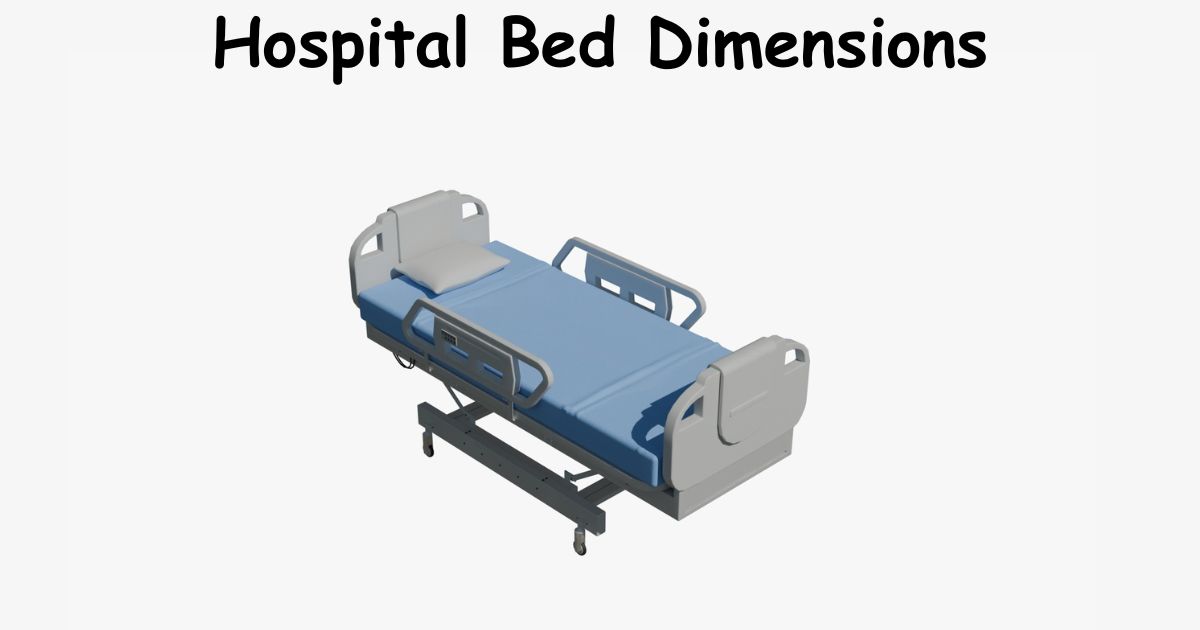
So you’re trying to figure out if a hospital bed will fit. Maybe it’s for a parent coming home from surgery. Maybe you’re setting up a room and the supplier just sent you a PDF full of spec numbers that mean nothing yet. Either way, you need real answers, not a brochure.
Let’s get into it.
The Core Numbers First
A standard hospital bed is 36 inches wide and 80 inches long. That’s the baseline. Most adults fit. Most doorways clear. Most bedrooms accommodate it.
But that’s the platform — the actual mattress deck. Once you add side rails, the total footprint grows to around 40–44 inches wide. That gap matters when you’re squeezing this thing through a hallway or planning how much walking space a caregiver has.
Height is where hospital beds earn their keep over regular beds. They don’t just sit at one fixed position. They move — usually anywhere from 16 inches off the floor up to 30 or 32 inches, depending on the model. Low for the patient getting in and out. High for the person doing the care work.
That adjustability is the whole point.
Width Is the Decision That Affects Everything Else
Most people fixate on length. Width actually matters more for day-to-day comfort and safety.
| Bed Type | Platform Width | Weight Capacity |
| Pediatric | 28–30 inches | Up to ~150 lbs |
| Standard | 36 inches | Up to 450 lbs |
| Wide | 39–42 inches | Up to 600 lbs |
| Bariatric | 48–72 inches | 600–1,000+ lbs |
A standard 36-inch bed works well for most adults. But “most” has limits. Someone sitting right at 250–300 pounds on a standard bed is at the edge of comfort and safety margin. Going one size wider — 39 or 42 inches — costs a little more but makes turning, repositioning, and daily movement noticeably easier.
Bariatric beds aren’t just wider versions of regular beds. They’re structurally different — reinforced frames, dual motors, heavier-duty mechanisms throughout. The extra width isn’t just about fitting a larger person. It’s about distributing pressure more evenly, which directly affects skin health during long-term bed rest.
Pediatric beds deserve their own mention because they’re shorter too, not just narrower. A child in a full-length adult bed has a lot of empty space around them, and that creates entrapment risks near the rails. Purpose-built pediatric beds run 48 to 60 inches long and 24 to 30 inches wide — proportioned for smaller bodies.
Length: When Standard Isn’t Enough
Eighty inches covers most people up to about 6 feet tall. Beyond that, you’re looking at extended models.
Extended beds run 84 inches — about 213 cm — and suit people up to roughly 6’4″. ICU beds often push to 88 inches, partly because taller patients end up there and partly because the clinical setup around the patient needs more room too.
For reference across units:
| Size | Inches (W × L) | CM | Feet | MM |
| Standard | 36 × 80 | 91 × 203 | 3 × 6.67 | 914 × 2032 |
| Extended | 42 × 84 | 107 × 213 | 3.5 × 7 | 1067 × 2134 |
| Bariatric | 48 × 80 | 122 × 203 | 4 × 6.67 | 1219 × 2032 |
| Pediatric | 28 × 60 | 71 × 152 | 2.33 × 5 | 711 × 1524 |
In meters, a standard bed is 0.91 × 2.03 m. Useful if you’re working from international specs or metric floor plans.
Read also: Queen Size Blanket Dimensions: Exact Inches, CM & Meters Explained
Height: The Number People Forget to Check
Here’s something that catches people off guard. They measure the room, measure the doorway, confirm the bed fits — and then realize they never checked how high or low the bed actually goes.
Manual crank beds go from about 16 to 24 inches. Semi-electric models handle 18 to 26. Full-electric beds reach 20 to 32 inches or higher. And then there’s a category called ultra-low — beds that drop to 8 or 10 inches off the floor.
That ultra-low range exists specifically for people with dementia or anyone with a high fall risk. A bed sitting 9 inches off the ground means a roll out of bed is a very short drop, not a serious injury.
Why the High End Matters Too
A caregiver working on a patient in a bed set at 16 inches is basically bent in half. Thirty minutes of that and their back is done for the day. A full-electric bed that raises to 30–32 inches makes wound care, linen changes, and repositioning dramatically easier — and reduces the chance of caregiver injury over time.
If family members are handling care at home without professional training, a wider height range isn’t a luxury. It’s practical protection.
Specialized Beds and Their Actual Dimensions
ICU Beds
Wider, longer, and taller than standard. Typically 39–42 inches wide, 88 inches long, with height going up to 36 inches. Built-in scales let staff weigh patients without transfers. CPR-release functions flatten the bed instantly. These aren’t home beds — they’re designed for continuous clinical intervention.
Hospice Beds
Same footprint as standard: 36 × 80 inches. The difference isn’t size — it’s the features. Quieter motors, gentler positioning, options like Trendelenburg (a slight head-down tilt for comfort and circulation). For home hospice setups, these fit through standard doorways and work in regular bedrooms.
Transport and Stretcher Beds
Narrower — around 24 inches wide, 72 inches long. Built to move through corridors, fit into elevators, and navigate tight spaces. Not meant for extended lying. Once a patient reaches their destination, they transfer to a proper bed.
Mattresses: The Fit Has to Be Exact
A hospital mattress is 36 × 80 × 6 inches. That sixth number — the 6-inch thickness — is easy to miss and it affects the total bed height more than people expect. Add a 6-inch mattress to a frame sitting at 20 inches, and the surface the patient actually lies on is 26 inches up.
The fit needs to be precise. A mattress even half an inch too narrow leaves a gap between the edge of the mattress and the side rail. That gap is a safety problem — limbs, and in rare cases heads, can become trapped. Safety guidelines cap acceptable rail gaps at 4.5 inches for exactly this reason.
Hospital mattresses are not the same as home twin mattresses. A regular twin is 38 × 75 inches. A twin XL is 38 × 80 inches. Both are slightly wider than a hospital mattress. They’re close — but they don’t match.
One practical check: measure the deck (the actual surface the mattress sits on), not the outer bed frame. Some frames have a lip or border that makes the usable surface slightly smaller than the listed width.
Read also: King Size Pillow Dimensions: The Real Answer You’re Looking For
Fitting This Into a Real Home
Doorway first. Most interior doors are 32 to 36 inches wide. A standard hospital bed is 36 inches at the platform — and it’ll have frame hardware adding another inch or two on each side. Some deliveries require removing a door temporarily. Find out before the truck arrives.
Room size: a 10 × 10 foot room technically works but leaves little comfort. A 12 × 12 bedroom with a standard bed leaves roughly 4 feet of open space on each side — enough for a wheelchair to maneuver and a caregiver to work without bumping into furniture.
Add two feet of buffer around the bed for equipment. Oxygen concentrators, IV poles, suction machines — these need floor space too. Map that out before you finalize where the bed goes.
Electric beds need a power outlet within cord reach. Check that location before the bed is positioned, not after.
What Gets People Into Trouble
Measuring only the platform and forgetting rail width is the most common mistake. The bed that “should fit” with two feet of clearance on each side suddenly has 14 inches because nobody accounted for the raised rails.
Buying a home mattress to use on a hospital frame. Looks similar, doesn’t fit the same. The gap risk is real.
Choosing length based on height alone without checking weight. A 6’1″ person who weighs 350 pounds needs a wider bed — not just a longer one.
Skipping the trial period. Many suppliers offer 30-day rentals. For a home setup where you’re not certain about the space or the patient’s needs, renting first costs less than returning a bed that doesn’t work.
Straight Answers to Real Questions
Is a hospital bed the same as a twin XL?
No. A twin XL is 38 × 80 inches. A hospital mattress is 36 × 80 inches — two inches narrower. Close, but not compatible.
What’s the total width with rails?
Add 4 to 8 inches to the platform width. A 36-inch bed typically reaches 40–44 inches total with rails raised.
How low can a hospital bed go?
Standard models go to 16 inches. Ultra-low models reach 8–10 inches, used for fall prevention.
Will a standard hospital bed fit through my door?
Measure your doorway. If it’s 36 inches or wider, a standard bed should fit — barely. Anything narrower gets complicated.
What size is a bariatric hospital bed in cm?
Most run 122 × 203 cm at the platform. Wider models reach up to 183 cm (72 inches) wide.
Do hospice beds have different dimensions than regular hospital beds?
Same footprint, different features. Both are typically 36 × 80 inches.
The Part Worth Remembering
Width and height range matter more than most people expect. Length gets all the attention — “will my tall dad fit?” — but width affects safety, comfort, and daily caregiving more directly.
Start with weight and height to narrow the category. Then think about the caregiver situation — who’s doing the work, how often, and what height range makes that realistic. Then check the room. Door first, then floor space, then outlet.
The specs on the sheet are just numbers until you walk them through a real space. Do that walk-through before anything gets delivered.

I am the editor and author of StoriesRadius.com, a blog about measurements and dimensions. I enjoy turning numbers and sizes into simple stories that anyone can understand. From everyday objects to curious facts, I share clear guides based on real research and experience. My goal is to make learning about length, height, and size fun, useful, and easy for all readers.