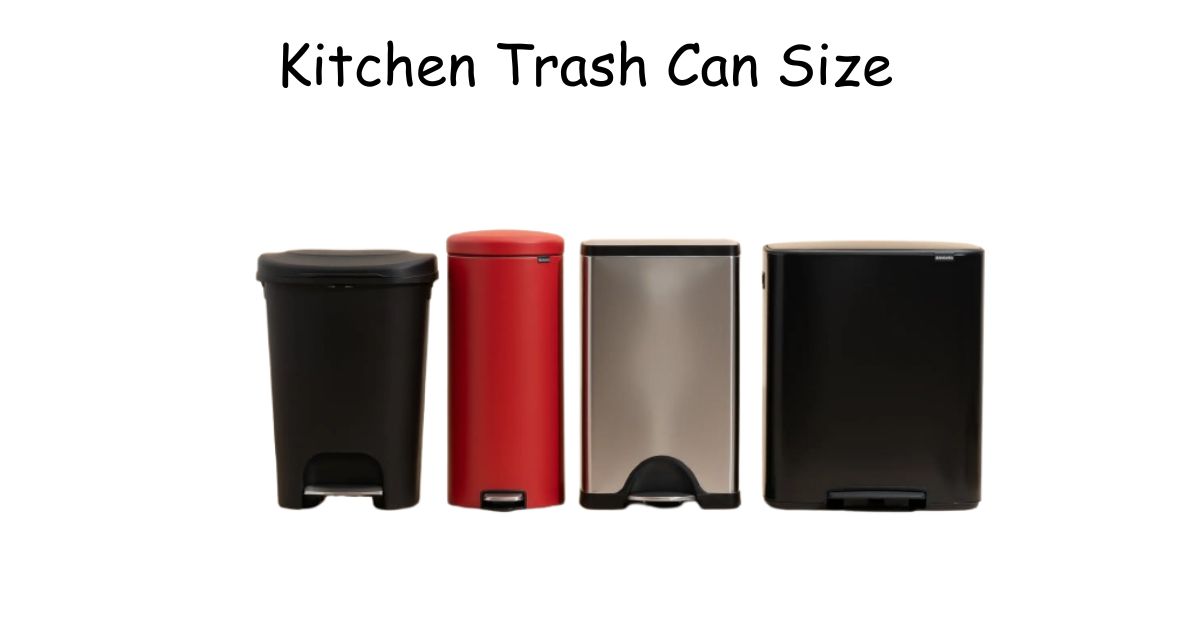
You bought the can. Got home. It doesn’t fit under the counter. Now you’re returning it.
This is the most common trash can mistake people make — and it’s completely avoidable.
Size on a trash can means two separate things. There’s how much it holds (gallons or liters). Then there’s how much space it takes up (height, width, depth). These don’t automatically match. A tall slim 13-gallon can and a short wide 13-gallon can hold the same amount of garbage. But they fit very different kitchens.
Know both numbers before you buy anything.
The Sizes That Actually Exist
Most stores push 13 gallons hard — and honestly, it’s popular for a reason. It hits the middle ground between emptying it constantly and letting trash sit too long. Standard bags are built around it. Most kitchen layouts fit it.
But it’s not the only option.
Small cans (4–8 gallons / 15–30 liters) These run about 18–22 inches tall and 10–12 inches wide. Perfect for apartments, under-sink spots, or anyone who barely cooks at home. One person eating simple meals might never need to go bigger.
Mid-range cans (10–13 gallons / 38–50 liters) The 24–30 inch height range. Fits alongside most counters without looking awkward. Works for one to four people depending on cooking habits.
Larger cans (14–20 gallons / 53–75 liters) These get tall — 25–35 inches — and noticeably wider. A family that cooks from scratch most nights will appreciate this. It’s not overkill; it’s just realistic.
High-volume (21+ gallons / 80+ liters) Over 30 inches tall, often on wheels. Not typical for everyday kitchens unless you’re hosting regularly or have a large household.
A Practical Size Chart
| Capacity | In Liters | Height | Width | Right Bag |
| 4–8 gal | 15–30 L | 18–22 in | 10–12 in | Small liner (20×20 in) |
| 10–13 gal | 38–50 L | 24–30 in | 12–15 in | Tall kitchen 13-gal bag |
| 14–20 gal | 53–75 L | 25–35 in | 14–24 in | Large kitchen bag |
| 21+ gal | 80+ L | 30+ in | 18+ in | 30-gal contractor bag |
How Your Habits Decide the Size
Forget household size for a second. Think about what actually goes in your trash.
A person who meal preps — lots of vegetable scraps, packaging, cooking mess — fills trash faster than someone eating takeout from containers. Cooking style matters more than headcount.
Some real patterns:
- Solo person, light cooking → 7–10 gallons, emptied once or twice a week
- Couple cooking most nights → 13 gallons, emptied every 3–4 days
- Family of four, regular cooking → 13–16 gallons, emptied every other day
- Large family or frequent hosting → 20 gallons or a dual-bin setup
If you compost food scraps separately, subtract roughly 30% from your estimate. Coffee grounds, peels, and leftovers add up faster than people realize.
Read also: Soda Can Dimensions: Exact Sizes in Inches, MM & ML 2026
Fitting It Into Your Actual Kitchen
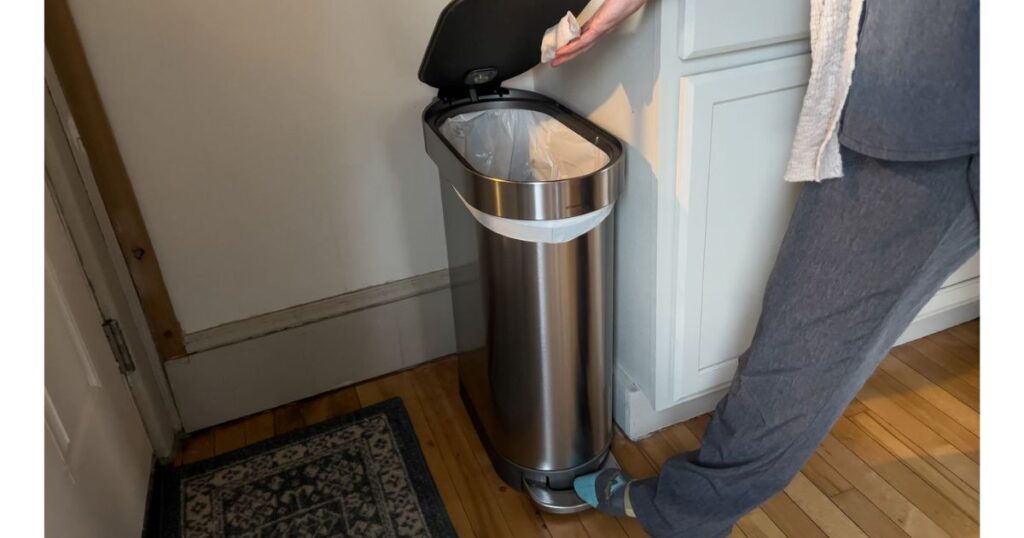
This is where measuring saves you from a return trip.
Under the sink: Pipes eat up height. Most under-sink cans need to stay under 20–22 inches to fit cleanly. That limits you to around 7–10 gallons. Some slim rectangular designs squeeze in a 13-gallon if the cabinet runs deep — but measure first, assume nothing.
Beside an island or counter: 13-gallon rectangular cans tuck in well here. Leave 2–4 inches around the sides for the lid to open properly.
In a pantry: More flexibility. You can go up to 20+ gallons on wheels and just roll it out as needed.
Tiny kitchens: Slim designs can be 10–13 inches wide and still hold 10–13 gallons. They go taller instead of wider. Worth looking at if floor space is the problem.
The cardboard box trick actually works — cut a box to the exact dimensions of what you’re considering and live with it in the spot for a day. You’ll know immediately if it interrupts how you move around.
Getting the Bag Right
Wrong bag size causes more daily annoyance than any other trash can issue. Too small and it slides down into the can. Too big and it bunches and flops everywhere.
- 4–8 gallon can → small wastebasket liner, roughly 20×24 inches flat
- 10–13 gallon can → standard tall kitchen bag (what most stores label as “13 gallon”)
- 20+ gallon can → 30-gallon bag minimum; contractor bags for heavy loads
One thing most people don’t think about: bag thickness. If wet food scraps, meat packaging, or sharp items go in regularly, anything under 0.9 mil will tear. Thin grocery bags are fine for dry waste in small cans. For a main kitchen bin that takes everything — go thicker.
Read Also: Food Can Sizes: What Every Number, Code, and Ounce Actually Means
Shapes, Materials, and a Few Real Opinions
Rectangular beats round for most kitchens. It sits flush against a wall, fits more in less footprint, and doesn’t leave weird dead space in corners.
Brushed stainless steel hides fingerprints better than polished. Plastic is lighter and easier to clean but shows scuffs over time. Matte black plastic holds up surprisingly well.
Step-on pedal lids are worth it if you cook with messy hands. It’s one of those small things that genuinely improves daily life in the kitchen.
Sensor lids are nice in theory. In practice, they open at odd moments and run on batteries that always die at inconvenient times. Not essential.
Dual-compartment cans split into trash and recycling sections — usually around 2×8 gallons in one unit. Great if you want to sort without two separate cans on the floor.
Metric Conversions (Quick Reference)
If your specs are in centimeters and liters:
- 13 gallons = 50 liters / a 25-inch can = 63.5 cm tall
- 8 gallons = 30 liters / a 20-inch can = 50.8 cm tall
- 20 gallons = 76 liters / a 30-inch can = 76.2 cm tall
European bins typically label 40–60 liters as standard kitchen size. That matches the US 10–16 gallon range almost exactly.
To convert on your own: gallons × 3.8 = liters. Inches × 2.54 = centimeters.
Three-Bin Sorting Without Chaos
A lot of kitchens now run three bins — trash, recycling, compost. It sounds like more work upfront, but once it’s set up, it actually makes daily kitchen life cleaner.
A setup that doesn’t take over your kitchen:
- One 13-gallon main trash can
- One 8-gallon recycling bin tucked beside it or inside a lower cabinet
- One small 2–5 gallon countertop compost bucket with a tight lid
Color coding removes all decision fatigue. Black for trash, blue for recycling, green for compost. After a few days it’s automatic.
This kind of sorting typically cuts main trash volume by 30–40%, which means if space is genuinely tight, you can downsize your main can and still manage fine.
Read also: Paint Can Sizes: The Only Guide You Need Before You Buy
Real Questions People Ask
What size does an average kitchen trash can need to be?
For most households, 13 gallons (50 liters) is the practical middle ground. It’s not about average — it’s about your cooking habits and how often you want to empty it.
How tall is a standard kitchen trash can?
Most 13-gallon cans fall between 24–30 inches tall. Slim versions go taller. Shorter wide designs run around 22–25 inches. Always check the product specs, not just the capacity.
What trash can actually fits under a kitchen sink?
Anything 20–22 inches tall or less. Measure your cabinet height before assuming — pipe placement varies a lot by home.
Can I use any bag in a 13-gallon can?
You can, but bags labeled “tall kitchen 13-gallon” are specifically sized for it. Off-size bags slip, bunch, or tear at the edges.
Is 13 gallons enough for a family of four?
Usually yes — if you recycle and compost separately. If everything goes in one bin, some families push toward 16–20 gallons to avoid daily emptying.
The Part That Matters Most
Capacity is an estimate. Dimensions are a fact.
You can guess roughly how much trash your household makes. You cannot guess whether a can fits your under-sink cabinet or beside your island. That requires a tape measure and two minutes.
Measure the space first. Match a can’s physical dimensions to what you have. Then pick the capacity that fits within those constraints.
Everything else — lid type, material, color, brand — is preference. There’s no wrong call there. But skipping the measuring step is how you end up back at the store.

I am the editor and author of StoriesRadius.com, a blog about measurements and dimensions. I enjoy turning numbers and sizes into simple stories that anyone can understand. From everyday objects to curious facts, I share clear guides based on real research and experience. My goal is to make learning about length, height, and size fun, useful, and easy for all readers.