You’re standing in your garage, or maybe scrolling a product page at midnight, trying to figure out if a milk crate will actually fit where you need it to go. The problem isn’t finding milk crates — it’s figuring out which size works for your specific situation before you waste money or shelf space.
Here’s everything you need.
The Two Sizes That Cover Most Situations
Milk crates come in two main shapes, and understanding the difference saves a lot of guesswork.
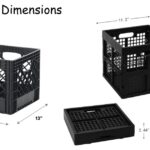
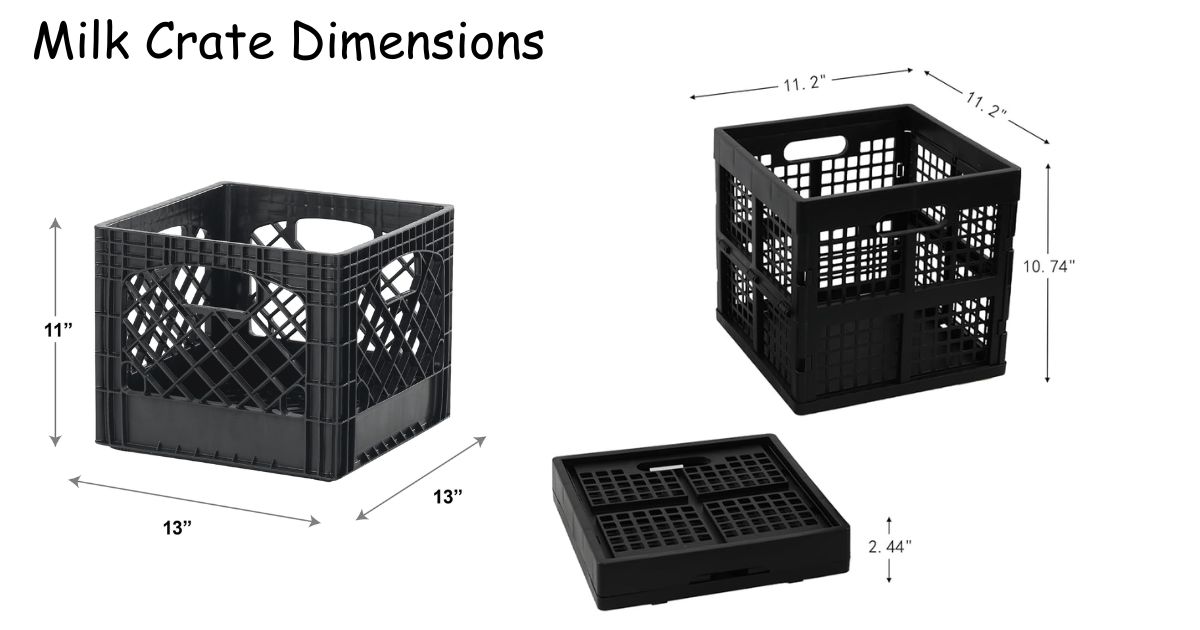
The square crate — the one most people picture — measures 13 x 13 x 11 inches on the outside. Inside, you’re working with about 12 x 12 x 10.5 inches of actual usable space. It holds 16 quarts or up to 40 pounds.
The rectangular crate is longer: 19 x 13 x 11 inches outside, with an interior of roughly 18 x 12 x 10.5 inches. It handles 24 quarts and can take loads of 50 pounds or more.
That 1 to 1.5-inch gap between outer and inner dimensions isn’t wasted space — it’s the structural ribbing built into the walls that lets these things stack without collapsing under weight.
Why the Inside Measurement Is the One That Actually Matters
Most people measure their shelf, see a crate labeled “13 inches,” and assume it fits. Then it doesn’t slide in cleanly. The outer number includes the ribs. The inner number tells you what goes inside the crate.
If you’re fitting records, books, jars, or tools — you want the interior dimension. If you’re measuring a shelf slot — you want the outer dimension plus a small gap for easy access.
Size Breakdown by Use
| Crate Type | Outside (in) | Inside (in) | Capacity | Fits Best For |
| Square Standard | 13 x 13 x 11 | 12 x 12 x 10.5 | 16 qt / 40 lbs | Vinyl records, books, pantry |
| Rectangular 24 qt | 19 x 13 x 11 | 18 x 12 x 10.5 | 24 qt / 50+ lbs | Laundry, tools, bulk produce |
| Heavy-Duty 7 Gallon | 18.5 x 12 x 9.5 | 17 x 11 x 9 | 29 qt | Dense loads, garage stacking |
| Compact Square | 13.125 x 13.125 x 11 | 12 x 12 x 10.5 | 0.9 cu ft | Tight shelving, small rooms |
One thing worth noting: that compact square and the standard square are nearly identical. The 0.125-inch difference barely matters in practice, but if you’re building tight fitted shelving, it can cause mixed stacks to feel slightly off.
Read Also: Chess Board Dimensions: Square Sizes, Tournament Standards & Piece Matching Guide
Vinyl Records and the Square Crate
This is one of the most searched combinations — and it works well. A standard 12-inch record sleeve is about 12.5 inches tall. The square crate’s 12-inch interior width gives just enough clearance to stand records upright without bending. You’ll fit roughly 35 to 40 albums per crate.
The open slat design actually helps here — it grips sleeves lightly so nothing topples when you’re flipping through. Rectangular crates fit more volume but records tend to lean and sag without a full crate. Square wins for record storage.
Metric Conversions
For anyone working in centimeters:
Square crate — outside: 33 x 33 x 28 cm / inside: 30 x 30 x 27 cm
Rectangular crate — outside: 48 x 33 x 28 cm
Stack five square crates and you’re at roughly 140 cm tall — useful for planning a shelving unit without pulling out a calculator.
Lidded Versions
Standard outer dimensions stay the same — usually 19 x 13 x 11 inches — but the lid adds about an inch of height and a slight overhang on the sides for stacking stability. Interior volume drops a bit. Clips hold firmly up to around 50 pounds. Worth it if you’re storing in a dusty garage or moving things around regularly.
Heavy-Duty and “Large” Crate Sizes
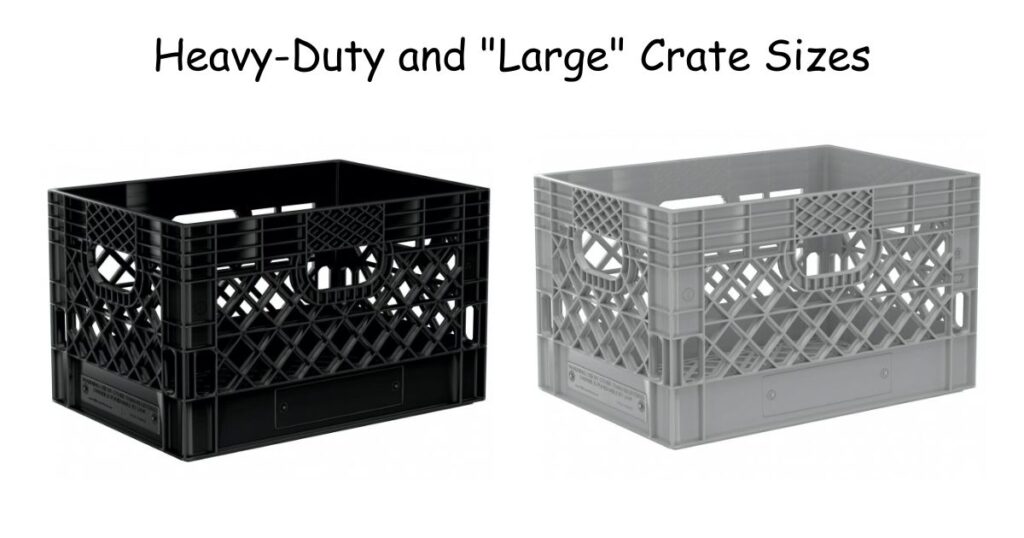
When searches say “large milk crate,” they usually mean one of two things: the 19-inch rectangular, or the 7-gallon heavy-duty style.
The heavy-duty version at 18.5 x 12 x 9.5 inches is shorter than the standard rectangular but built for denser, heavier content. Reinforced bottom, no sliding under load. Three stacked sits at about 30 inches — a solid base for a workshop surface or garage shelving that needs to take real weight.
These are made from HDPE plastic, rated from -20°F to 160°F. Empty, they weigh 3 to 4 pounds.
What the “Illegal Milk Crate” Thing Is Actually About
Dairy companies own their crates through a deposit system. The crates sitting behind a grocery store or dairy aren’t abandoned — they’re on loan. Taking them is considered theft and carries fines in several states.
Buying new from suppliers like Uline or Milk Crates Direct is straightforward and not expensive. Used crates sold through auctions or legitimate resellers are also fine. The only issue is taking ones that belong to a dairy without paying for them.
Materials and Real-World Durability
Most quality milk crates are HDPE — high-density polyethylene. It’s impact-resistant, handles temperature extremes, and properly aligned stacks can hold up to 500 pounds total load. The key word is “aligned.” Stack ribs need to line up, which means mixing brands or sizes can quietly reduce that strength.
Cheaper polypropylene versions are lighter (around 3 pounds empty) but flex more under load. Fine for light storage, not ideal for anything structural.
Crates vs. Other Storage
| Feature | Milk Crate | Plastic Bin | Wooden Box |
| Stack Load | 40–50 lbs each | ~30 lbs | ~60 lbs |
| Airflow | High (open slats) | Low | Medium |
| Cost per unit | $10–$20 | $5–$15 | $15–$30 |
| Lifespan | 20+ years | 5–10 years | ~10 years |
| Portability | Excellent | Good | Fair |
The open slat design is a genuine advantage for anything that needs airflow — produce, records, anything that gets musty in sealed containers. Sealed totes beat crates when moisture or dust is the concern.
Read Also: DVD Case Dimensions: The Numbers You Need Before You Print, Store, or Ship
Practical Questions Worth Answering
Do all square crates fit the same shelf?
Close but not exactly. Brand variations can add an eighth of an inch here or there. For open shelving it doesn’t matter. For built-in cabinet fitting, measure the actual crate you’re buying.
How tall does a stack of crates get?
One square crate: 11 inches. Five stacked: 55 inches / 140 cm. Three rectangular crates: about 33 inches tall.
Can you add a lid to any crate?
Not universally. Lids are brand-specific. If you buy from Uline, their lids fit their crate models. Cross-brand compatibility is hit or miss.
What’s the best size for garage storage?
Rectangular 24 qt if you need volume. Heavy-duty 7-gallon if weight is the priority. Square if you’re stacking and want uniform columns.
The Thing Most People Skip
Check the per-crate weight rating, not just total stack capacity. A crate rated at 40 pounds means the floor of that individual crate handles 40 pounds before it bows. Overload one crate in a stack and every crate above it shifts. That’s where things tip or crack — not from the total weight, but from one overloaded unit throwing off the whole column.
Measure your space, know your interior dimensions, match the crate to what’s going in it — and you won’t need to guess twice.

I am the editor and author of StoriesRadius.com, a blog about measurements and dimensions. I enjoy turning numbers and sizes into simple stories that anyone can understand. From everyday objects to curious facts, I share clear guides based on real research and experience. My goal is to make learning about length, height, and size fun, useful, and easy for all readers.