You measured the driveway. You measured the garage. But did you measure the bed? Most people don’t — until something doesn’t fit and they’re standing in a parking lot trying to shove a kayak in sideways.
This is the article I wish existed when I started comparing Tacoma configs. No filler, no obvious stuff you already know. Just the real numbers and what they mean for your actual life.
The Number Everyone Forgets to Check First
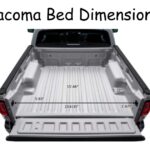
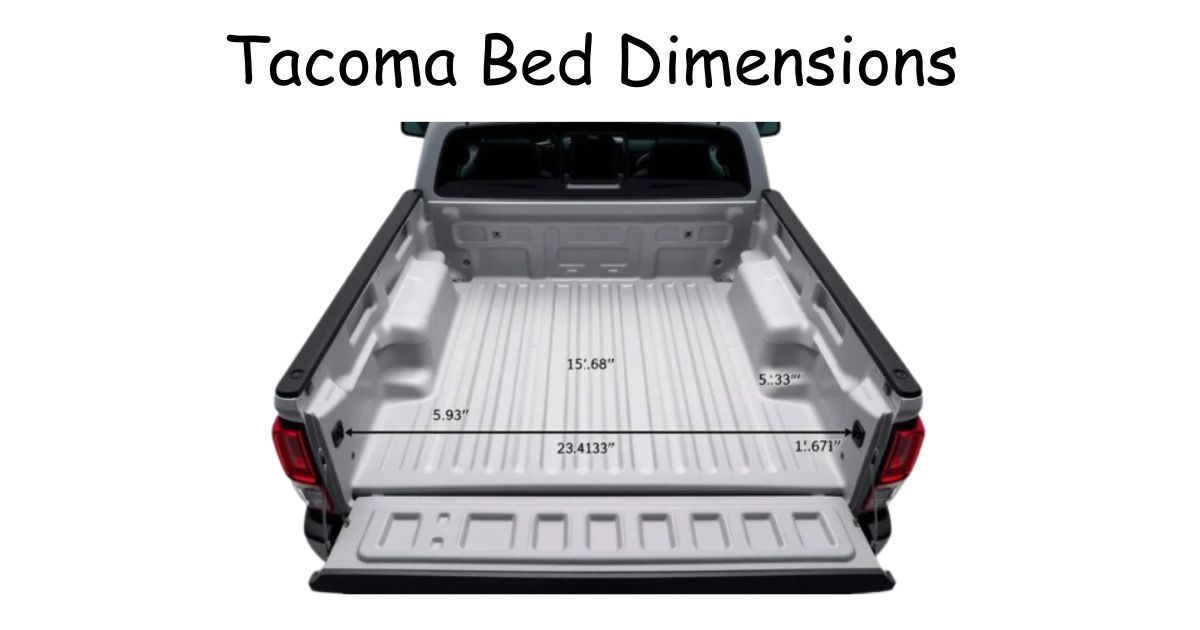
Before length, before depth — the wheel well width is the measurement that kills most load plans. On every current and recent Tacoma, that number is 44.7 inches. That’s the gap between the two wheel well humps that stick up from the floor.
A standard pallet is 48 inches wide. That’s wider than 44.7. So no, a pallet doesn’t slide in flat between the wells — it sits on top of them. Whether that works for your load depends on what you’re stacking.
The full floor width is 56.4 inches on current models. But you only get that full width at floor level where the wells aren’t. Keep that picture in your head while reading everything below.
Every Generation’s Bed Dimensions, Side by Side
Rather than describing each generation separately and making you scroll forever, here’s the complete picture:
| Generation | Short Bed Length | Long Bed Length | Width (floor) | Width (btw wells) | Depth |
| 4th Gen (2024–2026) | 60.3–60.5 in | 73.5–73.7 in | 56.4–56.7 in | 44.7 in | 19.1–21.2 in |
| 3rd Gen (2016–2023) | 60.5 in | 73.7 in | ~57.5 in (top) | ~42.5–44.7 in | 19.1 in |
| 2nd Gen (2005–2015) | ~60 in | 73.7 in | ~60 in | ~50 in | 18–19 in |
| 1st Gen (1995–2004) | N/A common | ~73–97 in | ~50 in | ~50 in | ~18 in |
A few things worth noting here. The 2nd gen had noticeably wider spacing between the wheel wells — closer to 50 inches. That’s a real difference if width is your constraint. The 1st gen long beds could stretch to 97 inches on regular cab configurations, which is rare but worth knowing if you’re buying vintage.
The 3rd gen width narrows from the top of the bed (57.5 inches) down to the floor near the wells (around 42.5 inches). That taper matters for platform builds — what fits at rail height doesn’t always fit at floor level.
Read Also: King Size Pillow Dimensions: The Real Answer You’re Looking For
What Changes Between Generations (Beyond the Numbers)
Length and width stayed fairly consistent across generations. What actually shifted was materials and usability.
Steel beds dominated the 1st and 2nd gen. Bombproof for job sites. Terrible for rust if you ignored them — especially along the wheel well seams and at floor drain holes. Plenty of 2nd gen trucks are still working perfectly, but plenty more have beds that look like they lost a fight with the ocean.
The 3rd gen kept steel but refined the shape. The 4th gen moved to aluminum-composite, which is lighter, dent-resistant, and doesn’t rust. That material shift also brought better factory tie-down placement and LED lighting on upper trims.
Payload capacity followed a different arc. Some base 3rd gen trims dropped to 1,150 lbs — lower than older models. The 4th gen bounced back to 1,430–1,620 lbs, with the TRD Pro sitting toward the bottom of that range despite being the most expensive off-road config.
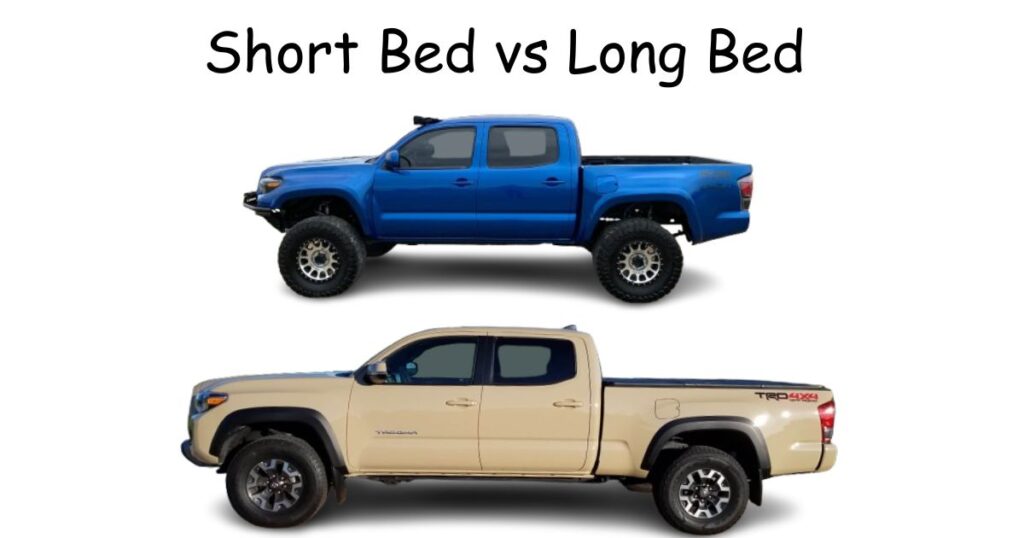
Short Bed vs Long Bed: The One Question That Matters
What’s the longest thing you regularly haul?
That’s it. That’s the question. Everything else is secondary.
If the answer is “bikes, camp gear, groceries, random furniture runs” — short bed. You get a truck that’s roughly 212–226 inches total, easier to park, slightly better turning circle, and marginally better fuel economy.
If the answer involves 8-foot lumber, full kayaks, or an ATV — long bed. The truck grows to 225+ inches overall. Parallel parking becomes a whole situation. But you get 73+ inches of actual cargo space instead of 60.
One thing people underestimate about the short bed: a sleeping platform works for anyone under about 5’9″. The long bed fits most adults flat. If camping comfort is part of your plan, that gap matters more than most people admit before they buy.
Real Load Scenarios, Real Answers
4×8 plywood sheet: Fits flat in the long bed. In the short bed, it hangs over the tailgate — legal with a flag, but not something you’d want for a two-hour drive.
Queen mattress: Doesn’t fit either bed flat. It’s 60 inches wide and the floor is 56. Twin fits fine. Full-size fits with some careful positioning.
8-foot kayak: Overhangs the short bed. Fits the long bed better but still close. Anything 12 feet needs a rack system regardless of bed length.
Standard ATV (~80 inches long): Long bed only, and just barely. Measure your specific machine — some ATVs are longer than you think.
10-foot 2x4s: The diagonal of a long bed is around 110+ inches, so yes, they fit at an angle. Short bed diagonal falls short.
Two mountain bikes: Both beds fit two bikes side by side with wheels removed or using fork mounts.
Before You Build a Sleeping Platform or Gear Setup
The wheel wells stick up approximately 10 inches from the bed floor. Your platform needs to account for that or you’ll have two bumps under your sleeping surface.
On the 3rd gen, the floor narrows noticeably at well level — measure at the floor, not at the rail, or you’ll cut your platform wrong. The 4th gen is slightly more consistent but still tapers.
Cargo volume is approximately 33.5 cubic feet in the short bed and around 41 cubic feet in the long bed. Those numbers help when you’re trying to figure out whether a gear layout will physically work before you start building.
Accessories Worth Knowing About
A bed extender stretches your effective length by about 2 feet for overhanging loads. Red flag on anything hanging more than 4 feet past the rear bumper — that’s not optional in most places.
Spray-in liners protect composite beds from scratches and chemicals better than drop-in liners, but drop-ins are easier to clean out. For steel beds on older generations, a liner is protection against the rust that will eventually find its way in.
Tonneau covers on short beds are mostly about hiding gear. On long beds they make more practical sense for actual security.
Read Also: Chess Board Dimensions: Square Sizes, Tournament Standards & Piece Matching Guide
The Questions That Keep Coming Up
Are 3rd gen and 4th gen bed dimensions interchangeable for accessories?
Mostly yes, but verify before buying a liner or tonneau. Small variations in rail height and mounting points mean “fits all Tacomas” isn’t always true.
Does the 2nd gen long bed actually hold more than the 3rd gen?
The length is the same (73.7 inches), but the 2nd gen had wider spacing between wheel wells — around 50 inches vs 44.7. For width-sensitive loads, the 2nd gen genuinely does have an edge.
Is the depth difference between generations a big deal?
Not for most loads. Going from 18 inches to 21 inches matters if you’re doing anything right at rail height — a taller pile, a specific cargo box. For general hauling, it rarely changes the decision.
Which bed is better for overlanding?
Short bed plus a quality rack system keeps the truck lighter and handles better on tight trails. Long bed gives you more floor space for interior builds. Neither answer is wrong — it depends on whether you’re building inside the bed or stacking on top of it.
The One Thing to Walk Away With
Everyone focuses on bed length. The more useful habit is checking the wheel well width first (44.7 inches on current and recent models), then the floor-to-rail depth, then the length.
Length is easy to work around with extenders and overhangs. The wheel wells don’t move. If your load is wider than 44.7 inches, it’s sitting on top of the wells, not sliding between them — and that changes whether it sits stable, whether it shifts on the highway, and whether you can close the tailgate cleanly.
Get that measurement right and the rest of your planning falls into place a lot faster.

I am the editor and author of StoriesRadius.com, a blog about measurements and dimensions. I enjoy turning numbers and sizes into simple stories that anyone can understand. From everyday objects to curious facts, I share clear guides based on real research and experience. My goal is to make learning about length, height, and size fun, useful, and easy for all readers.